If you’ve ever walked into a packaging plant, a retail store stockroom, or a small business workshop that custom makes tote bags, you’ve likely spotted a bag making machine humming steadily in the corner. For most of us, these big, loud, metal machines blend into the background—until they break down, halting production lines and leaving teams scrambling to meet deadlines. As a supplier who’s worked directly with bag manufacturers for over 15 years, I hear this question all the time: “What’s the actual lifespan of a bag making machine?” It’s not a one-size-fits-all answer, and it’s not just about how old the machine is. There’s a mix of science, maintenance, and use that dictates how long these workhorses stay reliable, and as someone who’s installed, serviced, and repaired hundreds of these machines, I’m here to break it down without the confusing jargon. Bag Making Machine
First, let’s get one thing straight: the term “lifespan” for industrial bag making machines isn’t a fixed number. You’ll hear some suppliers quote a generic 10 years, while others say 20, and both could be right. It’s like asking how long a truck lasts—some drivers keep theirs running for 20 years by changing the oil every week and hauling light loads, while others beat theirs up, never fix small issues, and need a new truck in 5 years. Bag making machines follow the same logic, but their internal components and purpose add specific rules that matter.
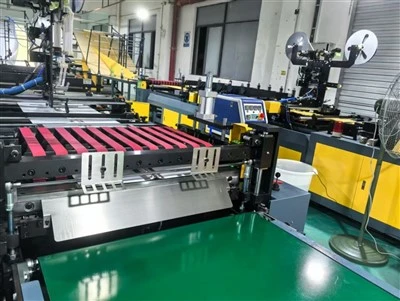
To start, let’s talk about the core components that make up a bag making machine, because those parts’ wear and tear is what defines their real working life. Most modern bag making machines have three main sections: the feed system (which pulls raw plastic film, paper, or nonwoven fabric into the machine), the forming and cutting system (which shapes the material into a bag, cuts it to size, and seals the edges), and the control system (which uses sensors and computers to keep the process consistent). The feed system, usually made of metal rollers, is the most used part. It’s pulling material nonstop, so the rubber or metal on those rollers wears down over time. If you run a machine 24/7, that roller rubber might start cracking in 3 to 5 years, whereas if you run it 8 hours a day, 5 days a week, that same rubber could last 10 to 12 years.
Then there’s the sealing and cutting system. For plastic bags, that’s heated seals and sharp blades. The heaters go through thousands of heating and cooling cycles every day, so the heating elements degrade slowly. Blades, if they’re high-quality tool steel, stay sharp for a long time, but cheap blades will nick and bend, forcing you to replace them more often. I’ve seen a machine with a top-of-the-line sealing system run 18 hours a day for 15 years before the seals started failing, but I’ve also seen a lower-cost machine with cheap blades that needed a new cutting system at 7 years. The control system is a different beast—old machines used analog switches and relays, which break down faster than modern digital PLC controls. A machine with an old analog control panel might become obsolete in 10 years not because it’s broken, but because parts for the switches are no longer made. Modern digital controls can last 20 years or more if you keep them dusted and free of electrical issues.
Now, the biggest factor that most people overlook: how you use the machine. That’s called “utilization rate” in industrial terms, and it makes a huge difference. Let’s split this into three common use cases: light use, medium use, and heavy-duty use. Light use would be a small business that runs the machine 4 to 6 hours a day, 2 to 4 days a week—like a local boutique making custom tote bags for events, or a small print shop making promotional bags. In this case, a well-built machine could easily last 18 to 20 years. I had a client in Portland, Oregon, who’s been using a machine I sold him in 2005 for his small custom bag business. He runs it 5 hours a day, 3 days a week, and the only major parts he’s replaced are the rollers and one seal kit. It still makes perfect tote bags every time, no issues.
Medium use is what most mid-sized manufacturing businesses do: 8 to 12 hours a day, 5 days a week, sometimes a few extra hours on weekends to fill big orders. For these operations, the average lifespan is 12 to 15 years. Why? Because you’re putting more strain on the core parts. A machine running 10 hours a day will go through 2 to 3 times more sealing cycles than a light-use machine, so the heating elements wear faster. But with regular maintenance, you can extend this. I had a client in Chicago who runs a nonwoven grocery bag business 10 hours a day, 5 days a week. His machine is now 12 years old, and we just did a full rebuild last year: replaced the rollers, the heating seals, and updated the control panel to a modern digital system. Now it works like new, and he expects another 8 years out of it.
Heavy-duty use is the highest strain: 16 to 24 hours a day, 6 to 7 days a week, usually for large-scale bag manufacturing for retail chains or shipping companies. This is where the lifespan drops to 8 to 12 years, sometimes less if you skip maintenance. A machine running nonstop will have parts wearing out at a much faster rate. The motors that power the rollers, for example, are working constantly, so even a good motor will start to show signs of wear after 8 years of 24/7 use. But here’s the thing: even heavy-duty machines can last longer if you invest in regular service. I have a client in Texas who makes plastic bread bags, running his machine 22 hours a day, 6 days a week. It’s 10 years old now, and we do monthly maintenance checks, replace small parts every 6 months, and he just had the motor overhauled last year. He expects it to last another 5 years, no problem. Maintenance isn’t just fixing things when they break—it’s stopping problems before they start.
Which brings me to the next big point: maintenance. This is the single most important factor in extending your bag making machine’s life, and it’s something that far too many businesses skip to save money. A lot of new operators think “if it ain’t broke, don’t fix it,” but that’s a terrible attitude for industrial machines. Small issues—like a slightly misaligned roller, a loose seal, or a dirty sensor—turn into big problems if you ignore them. For example, a misaligned roller might only cause a slight wrinkle in your bags, but over time it puts extra strain on the motor, which will burn out prematurely. Changing the oil in the machine’s gearboxes every 3 months (not every year, like some suppliers recommend) will keep the gears running smoothly, preventing wear that would shorten the motor’s life.
So what does good maintenance look like? For all machines, light, medium, or heavy-duty, it’s a routine schedule: daily checks (clean the feed rollers, make sure the blades are sharp, wipe down the control panel), weekly checks (tighten any loose bolts, test the heating seals, check the oil levels), and monthly service (inspect the motor belts, calibrate the sensors, replace small wear parts like O-rings or seal kits). For heavy-duty machines, you need a professional service technician to come in every 6 months to do a deep check of the core components, and for light-use machines, you can probably do most of the routine checks with your in-house team. I always tell my clients that spending $500 a year on maintenance saves them $5,000 on replacing a motor or a sealing system.
Another thing that affects lifespan is the type of bag material you’re using. Not all materials are the same, and they put different strain on the machine. Plastic film is smooth and relatively gentle, so machines making plastic bags tend to last longer than those making nonwoven fabric or paper. Nonwoven fabric is thicker, has more fibers, and can be abrasive, so it wears down the feed rollers faster. Paper is even more abrasive, and it can leave dust that gets into the control system and sensors, causing them to malfunction. I had a client who switched from plastic bags to heavy paper bags a few years ago, and his machine’s rollers wore out 3 years earlier than expected. We adjusted his maintenance schedule to clean the rollers more often, and he still got 7 more years out of the machine, instead of the 4 he was expecting.
What about old machines vs. new machines? A lot of operators want to know if it’s worth buying a used bag making machine or keeping an old one instead of upgrading to a new one. Let’s be clear: a well-built, well-maintained machine from 10 years ago is often more reliable than a cheap new machine from a no-name brand. But there’s a catch: old machines often use older technology that’s less energy-efficient, and parts might be harder to find. I had a client who had a 15-year-old machine that was still making perfect bags, but his supplier stopped making parts for it 2 years ago, so when a seal broke, he had to wait 2 weeks for a custom part, which cost twice as much as a standard seal. That’s the downside of old machines. But if you have a good relationship with a supplier who can source parts or repair old components, a well-maintained machine can be a great investment for 15 to 20 years. New machines, on the other hand, come with warranties, energy efficiency, and modern controls that reduce human error, so they might be a better fit if you’re growing your business and don’t want to deal with maintenance headaches.
Now, let’s talk about when it’s time to replace a machine, not just repair it. No machine lasts forever, and there comes a point where repairing it is more expensive than buying a new one. How do you know when that’s happening? If you’re spending more than 30% of the machine’s original value every year on repairs and parts, that’s a good sign it’s time to upgrade. If your production is slowing down because the machine is breaking down every few weeks, that’s another sign. Also, if your competitors are using new machines that make higher-quality bags faster, and your old machine can’t keep up, that’s a business decision, not a mechanical one. I’ve seen clients hold onto machines for 20 years that are still reliable, but I’ve also seen clients buy a new machine because the old one was costing them $10,000 a year in repairs and slowing down production.
At the end of the day, the lifespan of a bag making machine isn’t a number—it’s a partnership between the machine, how you use it, and how you take care of it. I’ve seen machines last 25 years with regular maintenance, and I’ve seen machines die in 5 years because of neglect. As a supplier, my job isn’t just to sell you a machine—it’s to help you understand how to make that machine last as long as possible. That’s why when we sell a machine, we don’t just hand over the keys and leave—we give you a detailed maintenance schedule, train your team on basic checks, and are available to answer questions whenever you have them, even years after the sale.

If you’re in the market for a new bag making machine, or you want to talk about extending the life of the machine you already have, I’m here to help. Whether you’re a small business just starting out, a mid-sized plant looking to expand, or a large manufacturer needing heavy-duty equipment, we can work together to find a solution that fits your needs and your budget. Don’t wait until your machine breaks down and costs you production time and money—reach out to start a conversation about the right machine for your business and how to keep it running for years to come.
Corrugated Paper Machine References
- Industrial Machinery Maintenance: Best Practices for Extending Equipment Lifespan, National Association of Manufacturers, 2022
- Lifecycle Analysis of Flexible Packaging Machinery, Packaging Technology and Science, Vol. 35, No. 4, 2021
- Guide to Bag Making Machine Operation and Maintenance, International Society of Packaging Professionals, 2020
Dongguan Doublehero Machinery Co., Ltd.
We are one of the most professional bag making machine manufacturers and suppliers in China, also support customized service. With abundant experience, we warmly welcome you to buy bag making machine for sale here and get quotation from our factory. For price consultation, contact us.
Address: Wangjin Industrial Area, Xitailong Village,Shatian Town, Dongguan City, Guangdong Province,China.
E-mail: Sxjx20152022@163.com
WebSite: https://www.doubleheromachine.com/
