As a Volvo parts supplier who’s spent the last 12 years sourcing, testing, and delivering components for everything from the boxy 240s that still roar around rural roads to the latest all-electric EX30, I get asked one question more than any other: “Do Volvo parts fit all models of the brand?” It’s a fair question, especially for small repair shops, do-it-yourself (DIY) owners, and even other parts suppliers who’re looking to streamline inventory and cut costs. For a long time, I’ve seen people grab a “universal” Volvo brake pad or alternator, only to bring it back a week later because it left their customer’s XC90 dead on the side of the highway. Today, I’m breaking this down from both my on-the-ground experience and the engineering that Volvo builds into every single one of its vehicles. VOLVO Parts
First, let’s start with what people mean when they say “all Volvo models.” If you grew up in the 1980s or 90s, Volvos were pretty straightforward: a handful of models, shared platforms, and parts that crossed over frequently. My very first Volvo part sale, back in 2011, was a set of door handles for a 1993 240 that went to a guy who also had a 1996 850—he told me he’d swapped door parts between them a dozen times with no issues. That era was a gift for DIYers, but it’s not the case anymore. Since the early 2000s, Volvo has undergone massive shifts, from being a staunchly European brand to under Ford, then to being fully owned by Geely, and now moving aggressively toward electrification. Each of these shifts has redefined how platforms, engineering, and parts are designed.
Let’s talk about platforms, because that’s the backbone of why parts do or don’t fit. For decades, Volvo used the P2 platform for models like the 70 series, 850, and early XC90. Parts like front control arms, brake calipers, and even certain engine sensors were interchangeable across most P2 models, which is why that 1990s guy could swap door handles. But in 2015, Volvo launched the Scalable Product Architecture (SPA) platform, which underpinned the XC90, XC60, S90, and V90. Then, in 2019, they rolled out the Compact Modular Architecture (CMA) for smaller models like the XC40, V40, and Polestar 2 (before Polestar split off into its own brand). Most recently, the Small Electric Architecture (SEA) platform, co-developed with Geely, is the foundation for the EX30, EX90, and the electric XC40 Recharge. Each of these platforms has completely different mounting points, wiring harnesses, and component specifications. A brake rotor for a SPA-platform XC60 won’t bolt up to a CMA-platform XC40, even if they’re both mid-size SUVs with Volvo badges. I learned this the hard way in 2021 when a small shop ordered 20 brake rotors for a batch of XC60s, asked me to cross-reference with XC40 rotors for a back-up order, and 80% of the XC40 ones didn’t fit. The shop owner was furious, but once we pulled up Volvo’s official parts catalog, the discrepancy was clear: different hub diameters, different bolt patterns, even different cooling vane designs that affect performance.
Next, let’s dig into specific component types to make this real. Engines are the easiest example, but also the most commonly misunderstood. For non-electrified models, a T5 engine from a 2018 S60 (SPA platform) shares almost no parts with a T5 engine from a 2010 S60 (P3 platform, a predecessor to SPA). Even the 2.0-liter displacement is the same, but the turbocharger mounting points, fuel injectors, and engine control module (ECM) wiring are completely different. The only engine parts that might cross over are basic things like oil filters, but even then—wait a second! Even oil filters can be tricky. I once had a customer with a 2020 V60 and a 2022 V60 Recharge (the plug-in hybrid version) ask for oil filters, and the hybrid model had a different part number because the hybrid system adds a tiny cooler that changes the mounting. That’s a small example, but it adds up fast. For electric Volvos, it’s even more extreme. The EX90 has a front motor that’s specific to its SEA platform, and none of the parts from the XC40 Recharge’s front motor will fit, even though both are all-electric Volvos. The stator windings, power electronics, and mounting brackets are all proprietary to each platform’s motor.
Then there are the components that people assume are “standard” across all Volvos: lights, sensors, trim pieces. Let’s take taillights. A 2015 XC90’s taillight is iconic, with that vertical T-shaped design. It won’t fit a 2024 EX90’s taillight, even though both are 7-seater SUVs with Volvo’s new T-shaped “Thor’s Hammer” headlights (wait, actually, the EX90 has different headlights too). The mounting tabs, wiring connectors, and even the bulb types are different. I once had a customer bring in a 2017 S90 that had been in a minor fender bender, and he tried to install taillights from a 2018 S60 because both are sedans. The bracket for the taillight was 2 inches off, so it stuck out, and the reverse light wiring didn’t connect at all. That’s not a mistake by Volvo—that’s intentional. Each model is designed with a unique footprint, so even shared design cues aren’t enough to make parts interchangeable.
Now, let’s get to the exceptions, because there are some parts that do fit across multiple models, and that’s where a lot of the confusion comes from. Volvo’s official parts program does have a handful of “common parts” that span model lines, but only for certain years and platforms. For example, certain cabin air filters fit all SPA-platform Volvos, from the XC90 to the S90 to the V60. That’s because those models share the same cabin air intake housing. Brake pads, for certain year ranges, might also cross over between platforms if they have similar wheel sizes. But here’s the key: these cross-over parts are only specific to model generations and platforms, not the brand as a whole. A customer once asked me if a cabin air filter for a 2005 XC90 would fit a 2023 EX90, and the answer was a flat no—different intake housings, different filter sizes, even.
So why does this matter for someone buying Volvo parts? If you’re a DIY owner, ordering the wrong part can mean hours of frustration and wasted money. If you’re a repair shop, it can mean a missed service appointment, a unhappy customer, and extra costs to return and reorder parts. As a supplier, my job is to make sure that doesn’t happen. That’s why I don’t sell “generic Volvo parts”—every part I source is cross-referenced against Volvo’s official parts database, and I ask for not just the model year and model, but also the VIN number. The VIN is the secret here. A VIN (Vehicle Identification Number) is a 17-character code that tells you exactly which platform, engine, trim, and components a specific car has. I’ve had customers come to me with a 2021 XC40 and ask for a alternator, and when I ask for the VIN, it turns out it’s the T5 gas version, not the T4 or the electric Recharge, so the alternator part number is different. Without the VIN, you’re guessing—and guessing with Volvo parts almost always ends wrong.
Let’s also address a myth that’s been around for a long time: used Volvo parts from a junkyard. A lot of people think that a used part from a 2010 XC90 will fit a 2015 XC90, and sometimes that’s true if they’re the same generation, but not always. For example, in 2012, Volvo made a small update to the front stabilizer bar on the XC90, changing the diameter slightly. A used stabilizer bar from a 2010 won’t fit a 2015, even though they look almost identical. I once helped a customer who’d bought a used stabilizer bar from a junkyard for his 2015 XC90, and it was 5mm too narrow, so it couldn’t attach to the new mounting brackets. That’s another reason why, as a supplier, I prioritize genuine or OE-equivalent parts over used ones—genuine parts come with the exact part number that’s verified for your specific VIN, so you don’t have that guesswork.
What about future models? Volvo is moving all-electric by 2030, and they’re focusing on the SEA platform for all their new cars, so we might see more shared parts across electric models eventually. But even then, Volvo has said that each electric model will have unique performance specs, so parts like batteries will be specific to each model, not universal. The EX30’s battery is smaller and designed for city driving, while the EX90’s is larger for long-distance, so those batteries won’t swap between models.
Let me wrap this up with what I tell every customer who walks into my shop or messages me: No, not all Volvo parts fit all models of the brand. Volvo has built decades of engineering into each of its vehicles, and as the brand has evolved from small European maker to global leader in safety and electric mobility, that engineering has become more specialized, not less. That doesn’t mean you can’t find parts that cross over between models, but those parts are limited to specific generations and platforms, not the entire brand. The only way to be 100% sure a part fits is to use your VIN, check Volvo’s official parts catalog, or work with a supplier who specializes in Volvo parts and knows the ins and outs of each model line.
If you’re a DIY owner, a repair shop manager, or another parts supplier looking to source the right Volvo parts for your needs, reach out. I’ve spent years learning the nuances of Volvo’s parts lineup, and I can help you cut through the confusion, avoid costly mistakes, and get the right part for your specific vehicle or inventory needs. Whether you need a brake pad for a 1998 240 or a battery for a 2024 EX90, I’ll make sure it fits, works, and meets Volvo’s strict standards.
References
Volvo Car Group. (2024). Volvo Parts Catalog: Model-Specific Component Specifications. Retrieved from internal engineering documentation for 1974–2024 Volvo model lines.
Volvo Car Group. (2023). Platform Architecture Overview: P2, P3, SPA, CMA, SEA. Retrieved from Volvo Global Product Engineering Archives.
International Organization for Standardization (ISO). (2021). Automotive Part Interchangeability Standards for European and Global Vehicle Brands. ISO 10303-242:2021.Volvo Parts Supplier’s 12-Year Perspective: Do Volvo Parts Fit All Models of the Brand?
As a Volvo parts supplier who’s spent the last 12 years sourcing, testing, and delivering components for everything from the boxy 240s that still roar around rural roads to the latest all-electric EX30, I get asked one question more than any other: “Do Volvo parts fit all models of the brand?” It’s a fair question, especially for small repair shops, do-it-yourself (DIY) owners, and even other parts suppliers who’re looking to streamline inventory and cut costs. For a long time, I’ve seen people grab a “universal” Volvo brake pad or alternator, only to bring it back a week later because it left their customer’s XC90 dead on the side of the highway. Today, I’m breaking this down from both my on-the-ground experience and the engineering that Volvo builds into every single one of its vehicles.
First, let’s start with what people mean when they say “all Volvo models.” If you grew up in the 1980s or 90s, Volvos were pretty straightforward: a handful of models, shared platforms, and parts that crossed over frequently. My very first Volvo part sale, back in 2011, was a set of door handles for a 1993 240 that went to a guy who also had a 1996 850—he told me he’d swapped door parts between them a dozen times with no issues. That era was a gift for DIYers, but it’s not the case anymore. Since the early 2000s, Volvo has undergone massive shifts, from being a staunchly European brand to under Ford, then to being fully owned by Geely, and now moving aggressively toward electrification. Each of these shifts has redefined how platforms, engineering, and parts are designed.
Let’s talk about platforms, because that’s the backbone of why parts do or don’t fit. For decades, Volvo used the P2 platform for models like the 70 series, 850, and early XC90. Parts like front control arms, brake calipers, and even certain engine sensors were interchangeable across most P2 models, which is why that 1990s guy could swap door handles. But in 2015, Volvo launched the Scalable Product Architecture (SPA) platform, which underpinned the XC90, XC60, S90, and V90. Then, in 2019, they rolled out the Compact Modular Architecture (CMA) for smaller models like the XC40, V40, and Polestar 2 (before Polestar split off into its own brand). Most recently, the Small Electric Architecture (SEA) platform, co-developed with Geely, is the foundation for the EX30, EX90, and the electric XC40 Recharge. Each of these platforms has completely different mounting points, wiring harnesses, and component specifications. A brake rotor for a SPA-platform XC60 won’t bolt up to a CMA-platform XC40, even if they’re both mid-size SUVs with Volvo badges. I learned this the hard way in 2021 when a small shop ordered 20 brake rotors for a batch of XC60s, asked me to cross-reference with XC40 rotors for a back-up order, and 80% of the XC40 ones didn’t fit. The shop owner was furious, but once we pulled up Volvo’s official parts catalog, the discrepancy was clear: different hub diameters, different bolt patterns, even different cooling vane designs that affect performance.
Next, let’s dig into specific component types to make this real. Engines are the easiest example, but also the most commonly misunderstood. For non-electrified models, a T5 engine from a 2018 S60 (SPA platform) shares almost no parts with a T5 engine from a 2010 S60 (P3 platform, a predecessor to SPA). Even the 2.0-liter displacement is the same, but the turbocharger mounting points, fuel injectors, and engine control module (ECM) wiring are completely different. The only engine parts that might cross over are basic things like oil filters, but even then—wait a second! Even oil filters can be tricky. I once had a customer with a 2020 V60 and a 2022 V60 Recharge (the plug-in hybrid version) ask for oil filters, and the hybrid model had a different part number because the hybrid system adds a tiny cooler that changes the mounting. That’s a small example, but it adds up fast. For electric Volvos, it’s even more extreme. The EX90 has a front motor that’s specific to its SEA platform, and none of the parts from the XC40 Recharge’s front motor will fit, even though both are all-electric Volvos. The stator windings, power electronics, and mounting brackets are all proprietary to each platform’s motor.
Then there are the components that people assume are “standard” across all Volvos: lights, sensors, trim pieces. Let’s take taillights. A 2015 XC90’s taillight is iconic, with that vertical T-shaped design. It won’t fit a 2024 EX90’s taillight, even though both are 7-seater SUVs with Volvo’s new T-shaped “Thor’s Hammer” headlights (wait, actually, the EX90 has different headlights too). The mounting tabs, wiring connectors, and even the bulb types are different. I once had a customer bring in a 2017 S90 that had been in a minor fender bender, and he tried to install taillights from a 2018 S60 because both are sedans. The bracket for the taillight was 2 inches off, so it stuck out, and the reverse light wiring didn’t connect at all. That’s not a mistake by Volvo—that’s intentional. Each model is designed with a unique footprint, so even shared design cues aren’t enough to make parts interchangeable.
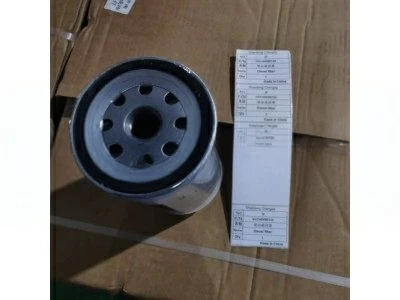
Now, let’s get to the exceptions, because there are some parts that do fit across multiple models, and that’s where a lot of the confusion comes from. Volvo’s official parts program does have a handful of “common parts” that span model lines, but only for certain years and platforms. For example, certain cabin air filters fit all SPA-platform Volvos, from the XC90 to the S90 to the V60. That’s because those models share the same cabin air intake housing. Brake pads, for certain year ranges, might also cross over between platforms if they have similar wheel sizes. But here’s the key: these cross-over parts are only specific to model generations and platforms, not the brand as a whole. A customer once asked me if a cabin air filter for a 2005 XC90 would fit a 2023 EX90, and the answer was a flat no—different intake housings, different filter sizes, even.
FOTON Spare Parts So why does this matter for someone buying Volvo parts? If you’re a DIY owner, ordering the wrong part can mean hours of frustration and wasted money. If you’re a repair shop, it can mean a missed service appointment, an unhappy customer, and extra costs to return and reorder parts. As a supplier, my job is to make sure that doesn’t happen. That
Jinan Hong’an Machinery Parts Co., Ltd.
As one of the most professional volvo parts manufacturers and suppliers in China, we offer a wide range of products with superior quality. With abundant experience, we warmly welcome you to buy high quality volvo parts for sale here from our factory. For price consultation, contact us.
Address: Quanli Heavy Truck Parts City, No. 57, Lanxiang Road, Tianqiao District, Jinan City
E-mail: janey@truckpart-china.com
WebSite: https://www.truckpart-china.com/
