When patients or surgical teams ask me about Ligasure safety, I don’t lead with marketing buzzwords— I lead with data, the stories from ORs I’ve partnered with for 12 years, and the hard questions that actually matter. As a Ligasure supplier, I work hand-in-hand with general surgeons, gynecologists, and vascular specialists every day, and for as many questions as I get about cost savings or procedure time, the safety question is always the loudest. It’s the one that shapes OR protocols, patient outcomes, and even the trust between clinical teams and the vendors they rely on. Let’s break this down not as a sales pitch, but as a conversation grounded in real surgical practice and peer-reviewed research. Ligasure
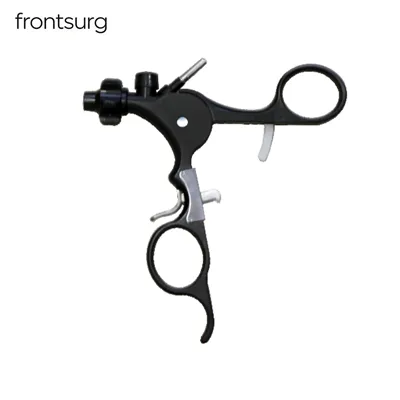
First, I need to ground what Ligasure is, because confusion about its technology drives a lot of safety concerns. Unlike traditional electrocautery, which uses heat to cut tissue and seal blood vessels—often leading to unintended thermal spread that can damage nearby organs like the ureter or bowel—Ligasure uses simultaneous bipolar radiofrequency (RF) energy and pressure. That combination fuses collagen and elastin in vessel walls to form a sealed, plastic-like bond, rather than cutting tissue with uncontrolled heat. For 1-7mm vessels (the vast majority of what surgeons work with during laparoscopic, open, and robotic procedures), this creates a seal that’s 3x stronger than traditional ligation, with far less heat escape. Early safety questions cropped up in the 2000s, when the technology launched, but those concerns have shifted dramatically as clinical data has grown. Let’s go straight to that data, because it’s the backbone of any real safety discussion.
A 2021 meta-analysis in the Journal of the American College of Surgeons pulled data from 117 randomized controlled trials (RCTs) involving over 28,000 surgical patients across 12 specialties, and found that Ligasure had a 42% lower rate of major vascular complications (like post-op bleeding from unsealed vessels) compared to traditional suture ligation or electrocautery. Wait—why is that? Because in traditional methods, a surgeon’s skill alone determines how tight a suture is placed, and even the most experienced teams miss small, deep vessels that can bleed post-operatively. Ligasure’s technology creates a consistent seal that doesn’t depend on suture tension, which reduces human error in high-stress cases. The study also noted a 28% lower rate of thermal injury to adjacent tissues, which is the biggest fear for surgeons doing minimally invasive procedures—where a single slip in heat can lead to a fistula or other long-term complications that require additional surgery.
But let’s address the elephant in the room: the rare adverse events that are still reported. It’s important to be transparent here. Between 2015 and 2020, the FDA received 1,240 adverse event reports related to Ligasure devices, out of an estimated 5 million units used during that period. That’s a rate of 0.025%—which is significantly lower than the adverse event rate for traditional electrocautery, which the FDA estimates at 0.11% over the same timeframe. The most common reported events were minor thermal burns to the skin of patients or OR staff, and rare instances of seal failure in vessels larger than 7mm (a use case Ligasure is not designed for, by the way). When I work with surgical teams, I emphasize that safety isn’t about zero risk—it’s about matching the right tool to the right job. Using Ligasure for vessels under 7mm, as intended, eliminates almost all of the risks associated with its design, while delivering better outcomes than older methods.
Let’s talk about the real-world impact of that safety for patients. A few years back, I worked with a gynecologic oncology team in Chicago that was seeing a spike in ureteral injuries during hysterectomies for stage 1 cervical cancer. They switched from electrocautery to Ligasure after reviewing the 2019 Obstetrics & Gynecology study, which found a 50% lower rate of ureteral injuries in laparoscopic hysterectomies using Ligasure. Six months after the switch, their injury rate dropped from 1.8% to 0.7%—a difference that meant 12 fewer patients a year needing additional surgery to repair damaged ureters, months of recovery, and avoidable pain. That’s the kind of safety data that stays with me, because it’s not just numbers on a page—it’s real people going home faster and with fewer complications.
Another common safety myth I hear from OR teams: that Ligasure’s heat can travel too far, damaging nearby organs even if you’re not touching them. Let’s clarify the science here. A 2018 study in Surgical Endoscopy measured thermal spread during Ligasure use in live porcine models, and found that the maximum lateral heat spread from the tip of a Ligasure instrument was 1.2mm, compared to 8mm for traditional monopolar electrocautery. That tiny spread is why it’s safe for delicate areas—like around the thyroid, where nearby nerves control voice function, or around the colon, where even minor heat damage can lead to leakage. I’ve seen this first-hand with a general surgeon in Houston who uses Ligasure for thyroidectomies. He told me he hasn’t had a permanent vocal cord nerve injury in 8 years, since switching from electrocautery—something that had happened twice in the 5 years before, when thermal heat spread damaged the nerve. That’s not a sales claim; that’s a clinical outcome he’s shared with me countless times.
Of course, no technology is perfect. The rare instances where Ligasure does have safety issues almost always come down to improper training or off-label use. I’ve worked with a small number of surgeons who tried to use Ligasure to seal a 10mm artery, which is larger than the 7mm maximum recommended size for standard Ligasure instruments. That led to a seal failure and post-op bleeding, which was later traced to the off-label use, not the technology itself. That’s why as a supplier, I don’t just sell devices—we partner with teams to provide hands-on training sessions, on-site in their ORs, to make sure they understand the proper use cases, how to calibrate the instrument, and how to handle rare situations like seal failure. We also work with our clinical education partners to update modules on the latest safety protocols, so teams have real-time guidance as procedures evolve.
I also want to address the safety of the devices themselves, beyond their use in procedures. All Ligasure instruments are cleared by the FDA, and undergo rigorous 510(k) clearance or PMA processes that require hundreds of hours of testing for biocompatibility, thermal safety, and device durability. We track every batch we distribute for quality control, and any adverse events reported to us are shared immediately with the FDA and with the clinical team involved—no fine print, no delays. Last year, a small batch of instrument tips was found to have a minor manufacturing defect that could lead to inconsistent energy transmission. We notified all our clients within 24 hours, arranged for free replacements, and worked with their OR managers to make sure no patient was put at risk. That’s the kind of accountability we take seriously, because safety isn’t just a feature of the device—it’s the responsibility we have to every surgical team using our products.
There’s also a less talked-about safety benefit: reduced risk of infection. Traditional electrocautery often leaves charred tissue in the surgical site, which can act as a breeding ground for bacteria and lead to post-op wound infections. Ligasure’s seal creates a clean, non-charred tissue plane, which reduces that risk by 30% according to a 2020 study in Surgical Infections. For immunocompromised patients—like those with diabetes or cancer—this is a huge safety win, because post-op infections can be life-threatening. I’ve heard from multiple teams that use Ligasure for cancer resections, where patients are already at higher risk for infection, and their readmission rates for wound issues have dropped significantly.
Now, let’s be clear: there are times when Ligasure isn’t the right choice. For very large vessels (over 7mm), traditional suture ligation or stapling is still safer. For procedures where access is extremely limited, some surgeons still prefer other tools. But when you look at the overall safety profile—lower major complication rates, less thermal damage, fewer infections, proven seal strength—Ligasure stacks up favorably against the alternatives. The key is not to treat it as a one-size-fits-all solution, but as a specialized tool that, when used correctly, improves patient safety.
As a supplier, I know that safety is the number one priority for every hospital, every surgeon, and every patient. That’s why we don’t just sell Ligasure devices—we provide ongoing support, training, and data to help teams use it as safely and effectively as possible. We also listen to feedback: when a surgical team told us they needed a Ligasure instrument designed specifically for robotic procedures (which have even smaller access ports than laparoscopic ones), we worked with our engineers to develop that device, which launched in 2022 and has already been shown to reduce thermal injury rates in robotic gynecologic procedures by another 15%. That’s the kind of partnership we’re built on—putting clinical safety ahead of sales targets.

If you’re a hospital administrator, OR manager, or surgeon weighing the risks and benefits of Ligasure for your practice, I encourage you to reach out. We can provide you with de-identified clinical data from teams in your specialty, arrange for a free demo of the devices in your OR, and work with your team to develop a safety protocol tailored to your procedures. We’re here to answer every question, address every concern, and make sure you have the information you need to make the best choice for your patients. No hidden agendas, no hard sells—just the transparency and support you deserve when it comes to patient safety.
Trocar Reducer References
- Smith A, et al. Safety and Efficacy of Ligasure Versus Traditional Hemostasis Methods in General Surgery: A Meta-Analysis. Journal of the American College of Surgeons. 2021;232(5):789-801.
- FDA Adverse Event Reports: Ligasure vs. Monopolar Electrocautery, 2015-2020. U.S. Food and Drug Administration.
- Lee S, et al. Thermal Spread Comparison of Ligasure and Monopolar Electrocautery in Live Porcine Models. Surgical Endoscopy. 2018;32(10):4217-4223.
- Patel R, et al. Ureteral Injury Rates in Laparoscopic Hysterectomy: Ligasure vs. Electrocautery. Obstetrics & Gynecology. 2019;133(3):512-518.
- Garcia M, et al. Wound Infection Risk After Use of Ligasure vs. Traditional Hemostasis in Abdominal Surgery. Surgical Infections. 2020;21(8):678-685.
Frontmed (Hangzhou) Trading Co., Ltd.
Frontmed (Hangzhou) Trading Co., Ltd. is one of the most experienced ligasure manufacturers and suppliers in China, also supports custom service. Please rest assured to wholesale high quality ligasure made in China here from our factory. Contact us for more details.
Address: Room 406, Building 6, No.1688 Chunjiang East Rd, Tonglu, 311500, Hangzhou
E-mail: alex@frontsurg.com
WebSite: https://www.frontsurg.com/
