Hey there, let’s cut to the chase—if you’re a die casting shop, mold maker, or someone just dipping your toes into high-volume metal part production, you’ve probably heard the phrase “surface finish” thrown around like it’s a magic fix for every part defect. But let’s be real here: it’s way more than that, and as a die casting mold supplier, I see how cutting corners on mold surface finish kills projects before they even hit the production floor. I’ve been in this game for over a decade, working with everything from small aluminum consumer parts to large zinc automotive components, so let me break this down like I would for a new client who just texted me at 8pm panicking about a mold that’s spitting out rough parts. Die Casting Mold

First off, let’s get the basics straight: mold surface finish refers to the texture, smoothness, and micro-geometry of the cavity (and core) surfaces that molten metal touches during die casting. It’s measured in Ra (roughness average) numbers, right? Wait, no—we throw in Rz (average peak-to-valley height) too, because Ra alone doesn’t tell the whole story. For example, a mold with an Ra of 0.8μm is super smooth, but if there’s a tiny sharp peak (a micro-burr) that’s part of that average, it’ll leave a tiny mark on your part every single cycle. I’ve had clients come to me with a mold they machined in-house thinking “Ra 1.6 is enough” only to find their parts get caught in the trim press because of those peak marks. That’s the stuff that doesn’t show up on a spec sheet until you’re mid-production.
Now, why does this matter so much for die casting molds specifically? Unlike injection molding molds, die casting molds deal with molten metal at 600°C for aluminum, 400°C for zinc—so it’s not just about getting a smooth surface for looks. First, cast parts pick up every single detail of the mold surface. If your mold has a rough texture, the molten metal will fill every little valley, and then when the part cools and ejects, those peaks on the mold can tear or stick to the part. I call that “part adhesion” and it’s one of the top reasons we get rush mold fixes at the last minute. Rough mold surfaces also trap die casting lubricant—your release agent, the stuff that stops parts from sticking. If you’ve got a textured cavity, lubricant can get stuck in the micro-grooves, leading to inconsistent release, more cycle time, and even porosity issues in the casting. Oh, and porosity—another big one. Tiny pits or imperfections in the mold surface can hold air that gets trapped in the molten metal as it injects, making your parts fail pressure tests. I once had a client who lost a $50k order because their in-house mold had an Ra of 3.2μm, and the micro-pits held air that caused 15% of their pressure sensors to leak. We fixed the mold to Ra 0.8, and that defect dropped to less than 1% within a week. That’s the kind of impact surface finish has, not just on a spec, but on your bottom line.
Next, how do we actually get that surface finish? It’s not just polishing the cavity and calling it a day—let’s walk through the process like I’d show a new machinist in my shop. First, after CNC machining the mold steel (we use H13 for aluminum, S136 for zinc, mostly), you’ve got a “as-machined” finish, which is usually around Ra 1.6 to 3.2μm. That’s the rough baseline. From there, we do what’s called “die polishing,” which is a whole different beast than polishing a kitchen counter. We start with coarser stones (like 120 grit) and work our way up to super fine diamond compounds (12,000 grit, even 20,000 for parts that need a mirror finish). But wait—hand polishing only gets you so far, especially on complex geometries like undercuts, thin walls, or deep cavities. That’s why we use things like electrical discharge machining (EDM) finishing, especially for hard-to-reach areas. Wait, EDM has its own surface finish quirks! If you use rough EDM, it leaves a recast layer—thin, brittle metal that’s super prone to cracking when molten metal hits it, or to peeling off during production. So after rough EDM, we have to do a “finishing EDM” pass to grind that recast layer off, then polish it. I’ve seen guys skip that recast layer removal and end up replacing a mold 3 months early because of surface flaking—total waste of money for both them and us, since we’d have to fix it under warranty.
Then there’s texturing. Sometimes clients want a “matte” or “satin” finish on their parts, so we do chemical etching or bead blasting on the mold surface. But again, that’s not just blasting the mold with glass beads until it looks nice—we control the pressure, bead size, and exposure time so the texture is consistent across the whole cavity. Too much bead blasting, and you’ll get a rough surface that causes sticking; too little, and the texture doesn’t show up on the part. I remember a client who wanted a specific “soft-touch” finish on their plastic (wait no, die cast part—zinc, for a handle) and they tried to texture the mold themselves, ending up with blotchy texture that made the handle look cheap. We had to re-do the mold’s surface finish, and they saved their product launch by a week. That’s the kind of thing where a supplier with experience matters—we don’t just follow instructions, we know how to adjust.
Now, let’s talk about common myths I hear every single week. First myth: “The smoother, the better.” Uh, no. If you’re making a part that needs to have a matte finish, a mirror smooth mold will leave a shiny part that’s hard to paint or coat—so you actually need a slightly rough surface to help the coating adhere. Another myth: “Surface finish only affects appearance.” I already mentioned adhesion, porosity, and cycle time, but let’s add mold life to that. A rough mold surface is way more prone to wear—when parts stick, you’re ejecting them harder, which puts stress on the mold cavity. That leads to premature pitting, galling, and mold failure. I’ve seen a mold with an Ra of 0.8 last 2x longer than a mold with an Ra of 3.2, all else equal. Also, if you’re making parts with thin walls (under 1mm), a slightly rough mold might cause the metal to freeze before it fills the cavity, leading to short shots. That’s a huge pain for high-volume production—short shots mean scrap, which adds up fast.
Wait, let’s get specific with numbers because that’s the stuff people actually care about. For general die casting parts (like brackets, housings), the standard is usually Ra 1.6 to 3.2μm. For parts that need a smooth surface for painting or plating, we go lower—Ra 0.8 to 1.6μm. For mirror-like finishes (like consumer electronics parts, smartphone frames), we hit Ra 0.2 to 0.8μm. And for textured parts, depending on the look, it can range from Ra 3.2 to 12.5μm. But here’s the thing: those numbers aren’t universal. If your mold is for zinc vs. aluminum, the optimal Ra is different. Zinc is easier to cast, so you can get a smoother finish easier, but it’s also softer, so a too-smooth surface might lead to more sticking. Aluminum is harder, so a slightly rougher mold is more durable, but you need to make sure it doesn’t cause porosity. I’ve had clients bring me specs from a competitor that said Ra 0.2 for their aluminum mold, and I had to tell them that’s overkill—they’d just be paying 30% more for the mold surface finish without any real benefit. That’s where we come in: we don’t just quote based on the number you give us, we recommend the right finish for your application.
Another thing I touch on all the time: post-production. The mold’s surface finish also affects how easy it is to maintain. A smooth mold is way easier to clean—you can just wipe down the cavity, no scrubbing, and lubricant doesn’t build up as much. A textured mold needs more frequent cleaning to prevent residue buildup, which leads to defects. I once had a client who ran a mold for 6 months without cleaning it, and the textured surface had so much lubricant and metal residue that their parts started having surface blemishes. When we re-polished the mold to a smoother Ra, they only needed to clean it once every 2 months, and their defect rate dropped 20%. It’s a cycle—good surface finish reduces maintenance, which reduces downtime, which saves you money.
Now, let’s be real—if you’re buying a die casting mold, you might be focused on the steel grade, the number of cavities, the cycle time. But surface finish is a make-or-break detail that a lot of suppliers cut corners on to undercut your quote. I’ve seen suppliers quote a mold with Ra 1.6, but they actually only polish it to Ra 3.2, because the difference in polishing time is a few hours, which saves them $500, but costs you $10k in production defects. That’s why it’s important to ask for proof—we provide roughness test reports for every mold we deliver, so you can verify the surface finish is exactly what you need. No vague promises, no cutting corners.
So, if you’re currently struggling with part defects, high scrap rates, or premature mold failure, chances are surface finish is playing a bigger role than you think. Maybe you’ve got a mold that’s sticking, or parts with rough edges, or porosity that won’t go away. I’ve worked with all kinds of clients, from startup brands making small batches to big automotive manufacturers running 24/7 lines, and I can tell you that getting the surface finish right early on saves you so much headache later. If you’re ready to talk through your project—whether you need a new mold, a re-polish for an existing one, or just advice on what surface finish will work best for your parts—hit me up. No sales pitch, just straight talk, and we can work out a solution that fits your budget and your production needs.
Wait, let’s make sure I didn’t skip anything. Oh, right—what about different mold types? Like, single-cavity vs. multi-cavity molds. For multi-cavity molds, we have to make sure the surface finish is consistent across every cavity, because if one cavity is rougher than the others, you’ll get different part quality, different ejection times, and some cavities will wear out faster. That’s a big one—we use coordinate measuring machines (CMMs) and roughness testers to check every cavity, so no surprises when you start production.
And one last myth to debunk: “Surface finish is just a cosmetic thing.” As I mentioned earlier, it affects mold life, cycle time, scrap rate, part adhesion, porosity, coating adhesion, and even regulatory compliance if you’re making parts for medical or automotive industries (which require strict quality standards). So yeah, it’s way more than cosmetic. It’s a core part of mold design that impacts every part of your production process.
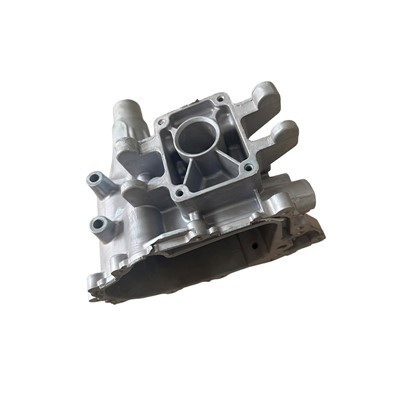
If you’re tired of dealing with mold issues that keep you from meeting deadlines, or you want to make sure your next mold is built to last and produce high-quality parts, don’t hesitate to reach out. We specialize in die casting molds for aluminum, zinc, and magnesium, and we know how to get the surface finish right every time, no cutting corners.
Die Casting Parts References
- ASTM International. (2020). Standard Guide for Measuring Surface Roughness of Metallic Surfaces Used in Die Casting. ASTM B208-20.
- Todd, R. I., et al. (2018). Die Casting Mold Surface Quality and Its Impact on Production Efficiency. Journal of Manufacturing Processes, Vol. 31, pp. 452-461.
- American Die Casting Association. (2021). Die Casting Mold Design Best Practices: Surface Finish and Maintenance. ADCA Technical Report 12-21.
Suzhou Ruide Die-Casting Mold Co., Ltd.
As one of the leading die casting mold manufacturers and suppliers in China, we warmly welcome you to buy durable die casting mold made in China here from our factory. All customized products are with high quality and competitive price. Contact us for pricelist.
Address: No.2, Wanchen Road, Huayang Village, Wangting Town, Xiangcheng District, Suzhou City, Jiangsu Province
E-mail: jada@cnrdmj.com.cn
WebSite: https://www.cnrdmold.com/
