Hey there! Let’s cut to the chase—if you own any lithium battery-powered gear, whether it’s your phone, wireless earbuds, power bank, or that portable work light you keep in the trunk, you’ve probably stared at a random charger and wondered, “Wait, can I just plug this in?” I get it—we’ve all been there, digging through a drawer full of old chargers like they’re some kind of weird tech treasure, grabbing the first one that fits the slot, and crossing our fingers it works. As someone who’s been in the lithium battery charger game for years (I can’t tell you how many times I’ve answered this exact question), I’m here to break this down like we’re chatting over coffee, no boring jargon, no fancy textbook stuff. Lithium Battery Charger
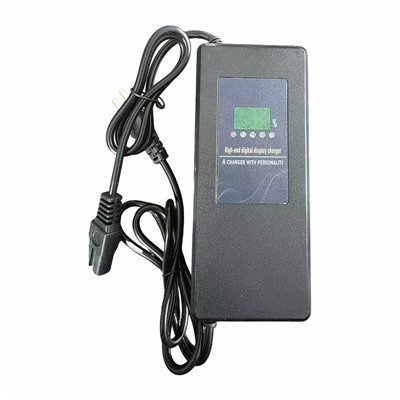
First off, let’s get one thing straight: lithium batteries are not like old NiCad or NiMH batteries. Those used to be way more forgiving—plug in a 9V into a 12V device (don’t actually do that) and it might still kinda work, even if it’s a little wonky. But lithiums? They’re like divas, honestly. They have super specific chemistry that relies on a tight, controlled flow of power to stay safe and last. Mess that up, and you’re looking at everything from a shorter battery life to, yeah, that scary thing you’ve seen on the news or social media—batteries overheating or even catching fire. I’ve seen a customer come in once with a swollen power bank that they’d plugged into a random fast charger from a random brand. Turned out the charger was outputting way too many amps for that specific lithium cell, and the battery had basically started “bloating” from all the unregulated power. Not fun.
Now, let’s talk about the two big specs that matter here—voltage and current. If you’ve ever glanced at a charger or your battery, you’ll see numbers like 5V, 9V, 12V, or 1A, 2.1A, 3A. That’s not just random text to fill up the box. Voltage is like the pressure of the power, and current is how much of that power is flowing. For a lithium battery, the charger’s voltage needs to match exactly what the battery is designed for. I don’t care if a plug fits—if the voltage is off, you should not use it. For example, most phone lithium batteries are 3.7V, but their chargers put out 5V (that’s the “output voltage” of the charger) because the battery’s internal electronics step it down. If you plug a charger that puts out 9V (like some fast chargers) into a phone that only needs 5V, that’s too much pressure. The battery’s not built to handle that—over time, it’ll wear out faster, and in a worst-case scenario, it could damage the cells.
Current is a little trickier because it can be a range, not a hard number. Think of current like the width of a pipe—more amps mean a wider pipe, so power flows faster. If your charger says 5V/2A and your battery says it can take up to 2.1A, that’s fine. The charger will only push as much current as the battery can handle, right? Like, if you have a straw (your battery’s max current) and a garden hose (your charger’s higher current), the water only flows through the straw’s width—no flooding. But here’s the catch: if your charger outputs less current than your battery needs, it’ll charge slow—like, really slow. If you’re trying to charge a tablet that needs a 2A charger with a 1A phone charger, that’ll take twice as long, and it might even get warm because the charger’s working harder than it’s supposed to. But is it dangerous? Probably not—unless you’re doing it for hours on end every single day, which will just wear out your battery’s overall lifespan faster.
Wait, but what about fast charging? I know everyone’s obsessed with that 30-minute full charge, and there are all these different fast-charging standards—USB-C Power Delivery, Qualcomm Quick Charge, Samsung Adaptive Fast Charging. I get it, it’s confusing. Can you use a random fast charger for your lithium battery? Maybe, but only if it uses the same standard as your device. For example, if your laptop uses USB-C PD, and you plug in a random PD charger from a different brand, it should work as long as the voltage and current ranges match. But if you plug in a Qualcomm Quick Charge 4+ charger into a device that only supports USB-C PD, it won’t fast charge, but it will charge at the safe, standard voltage/current. The problem comes when you use a fast charger that pushes too high a voltage or current for your battery’s specific design—some cheap no-name chargers skip the built-in safety chips that regulate power, so they just blast whatever they can through, which is bad news for lithium cells.
Let’s clear up another myth: “If the plug fits, it’s okay.” Nope. I’ve had customers bring in chargers that physically fit the port but are totally wrong for the battery. I once saw a guy with a drone that he’d plugged a toy charger into because it had the same round plug. That drone’s lithium battery died in mid-flight, crashed, and broke the frame. The toy charger only put out 0.5A, way too little for the drone’s 3A max current, so it couldn’t keep the battery charged. That’s a $1,000 drone down the drain over a wrong plug. And another time, a lady plugged her vape pen (which has a small lithium battery) into a laptop USB port that only puts out 0.5A—wait, no, actually she used a 12V charger for a 3.7V vape battery. Her battery overheated, melted the plastic, and scared her so bad she came to me panicking. Those safety chips in our chargers (hint: we build them into all our products) are non-negotiable. They’re like the bodyguard for your lithium battery—they monitor voltage, current, temperature, and shut off if anything goes haywire. Cheap chargers skip those to cut costs, and that’s where the risk is.
What about different lithium battery types? Like, is using a charger for an EV lithium battery okay for your e-bike? No way. EV batteries are huge, high-capacity, and use way different charging specs than a small e-bike battery. Even within the same category—like power tools—your cordless drill’s lithium battery needs a charger made specifically for that drill’s battery chemistry and voltage. I see people swapping drill chargers all the time, and it works… sometimes. But over months, it shortens the battery’s life. A drill battery that’s supposed to last 500 charges might only get 200 if you use the wrong charger. That’s a waste of money, especially since good lithium batteries aren’t cheap.
Wait, but there are exceptions, right? I don’t want to be a total buzzkill. Some devices have built-in charge controllers that work with a range of chargers. Most modern phones and laptops, for example, have those controllers, so you can use almost any USB-C charger that’s a known brand (no random no-names from Amazon, though) and it’ll work safely. But even then, I’ve heard of cases where a super cheap charger with no safety chips fried a laptop’s charge controller. So exceptions don’t mean “do whatever you want”—they just mean some devices are a little more forgiving than others.
Let’s talk about what we (as a lithium battery charger supplier) always tell our customers, because this is the advice that’s saved so many batteries. First, always check the specs on your battery first. It’ll say something like “Nominal Voltage: 3.7V, Max Charge Voltage: 4.2V, Max Charge Current: 2A.” Then, look at your charger’s specs—they need to match the max charge voltage, and the charger’s max current should be equal to or higher than the battery’s max charge current. That’s it. Super simple. Don’t guess—look at the numbers. If you lost the charger, or you need a new one, don’t just grab the first one that’s close. Look for the exact specs, or if you’re not sure, reach out to someone who knows lithium batteries (hi, that’s us!) to help you pick the right one.
Also, avoid super cheap chargers, full stop. I know everyone loves a $5 charger for their phone, but you get what you pay for. Those no-name chargers rarely have proper safety circuitry. They might be labeled with the right voltage and current, but they can’t actually regulate that—they’ll output more current than they say, or spike in voltage, which is terrible for lithium batteries. Our chargers might cost a little more upfront, but they’re built to meet strict lithium battery safety standards, and they add years to your battery’s life. Think of it as insurance for your expensive gear.
Let’s wrap this up with a real quick, no-fluff checklist you can use right now:
- Write down your battery’s max charge voltage and max charge current (check the battery itself or the manual).
- Find a charger that has a max charge voltage matching your battery’s, and a max charge current equal to or higher than your battery’s.
- Skip the random no-name chargers—opt for brands (or suppliers) that use safety chips.
- If it’s a fast charger, make sure it’s compatible with your device’s charging standard (like USB-C PD).
And if you’re ever confused, don’t take a chance. Reach out—whether it’s to us or another trusted tech company—because messing up a lithium battery isn’t worth the hassle. We’ve all been there, wondering if we can just plug that random charger in, but now you know the basics: it’s not just about fitting the plug, it’s about the specs and the safety.

If you’re in the market for a reliable lithium battery charger for your gear—whether it’s a phone, e-bike, power tool, whatever—we’ve got you covered. Our team specializes in designing chargers that are calibrated for different lithium battery chemistries, with built-in safety features to keep your batteries running safe and long. Don’t risk your expensive gear or your safety on a random charger—reach out to our team to chat through your needs, and we’ll help you find the perfect fit.
Battery Charger References:
- lithium-Ion Battery Safety: IEC 62133-2:2017. International Electrotechnical Commission.
- Understanding Lithium-Ion Charging Parameters: Battery University, Cadex Electronics Inc.
- USB Power Delivery Specification Revision 3.2: USB Implementers Forum, Inc.
- Effects of Overcharging on Lithium-Ion Cell Degradation: Journal of Power Sources, Volume 450, 2020.
Tianchang Hengze Technology Co., Ltd.
With abundant experience, we are one of the most professional lithium battery charger manufacturers and suppliers in China. Please rest assured to buy bulk lithium battery charger made in China here from our factory. If you have any enquiry about quotation, please feel free to email us.
Address: No. 8 Sanxing Road, Qinlan Town Industrial Park, Tianchang City, Chuzhou City, Anhui Province, P.R. China
E-mail: 604894957@qq.com
WebSite: https://www.hengzebc.com/
