Hey there, fellow chemists, lab managers, and anyone who’s ever stared at a beaker of bubbling reactants wondering, “Wait, what even is happening here?” If you’ve worked with industrial or lab chemicals, you’ve probably crossed paths with two heavy hitters: inorganic bases and hydrogen halides. And if you’ve ever wondered how those two play together? Stick around—this is the stuff we supply, and let’s be real, we get way too many questions about it every week. No stuffy textbooks here, just the real, usable science that keeps your processes running smoothly. Inorganic Acids & Bases
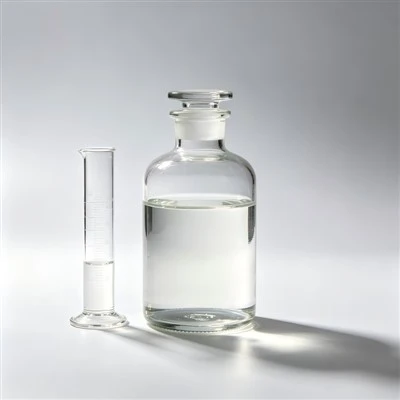
First, let’s set the scene for anyone who’s a little fuzzy on the basics. Inorganic bases (we’re talking things like sodium hydroxide, potassium hydroxide, calcium hydroxide—your go-to strong, non-organic bases) and hydrogen halides (that’s HCl, HBr, HI, even HF, though we know HF is trickier to handle) are both super common in all sorts of industries: pharma, water treatment, metal plating, food processing, you name it. But when they react? It’s not just a random fizz—this is an acid-base reaction at its most straightforward, and understanding how it works can save you time, money, and even a mess in your lab or plant.
Let’s break down the core reaction first. For any inorganic base (let’s use a general one, like MOH, where M is a metal cation, like Na⁺ or K⁺) and a hydrogen halide (let’s call that HX, where X is Cl, Br, I, whatever), the basic rule is: acid + base = salt + water. That’s it, in a nutshell. But wait—why does that happen? It all comes down to ions. Hydrogen halides, when they’re dissolved in water (which they almost always are for industrial use), split into H⁺ (that’s the proton, the “acid part”) and X⁻ (the halide ion, the “halide part”). Inorganic bases, especially the strong ones like NaOH, split into OH⁻ (the hydroxide, the “base part”) and M⁺ (the metal cation). When those two mix, the H⁺ and OH⁻ team up to make H₂O—water. And the leftover ions, M⁺ and X⁻, join together to make a salt.
Let’s test that with a real example you probably have in stock: sodium hydroxide (NaOH) and hydrochloric acid (HCl). Mix a solution of NaOH and HCl, and what do you get? A big, satisfying “salt + water” reaction. The balanced equation looks like this: NaOH(aq) + HCl(aq) → NaCl(aq) + H₂O(l). See? NaCl is table salt, basically—super simple. But here’s where it gets more specific for our industry, because not all inorganic bases and hydrogen halides react the same way, especially when we’re talking about concentrated solutions (which is what most industrial customers use, since shipping concentrated is way cheaper than watered down).
Take calcium hydroxide, another super common inorganic base we supply. Mix that with hydrochloric acid: Ca(OH)₂(aq) + 2HCl(aq) → CaCl₂(aq) + 2H₂O(l). That’s calcium chloride, which is used for de-icing roads, dust control, even as a food additive. But wait—if the solutions are really concentrated, do you just get a dissolved salt? Sometimes, if it’s not too much, but if you have excess of either reactant? That’s where things get useful, and also where people run into problems. For example, if you use too much HCl with Ca(OH)₂, you might end up with a more acidic solution than you wanted, which can mess up plating baths or water treatment pH levels. That’s why we get so many calls from customers who need to adjust the ratio exactly—get the salt concentration right, not too much acid, not too much base.
Now, let’s talk about the exceptions, because nothing in chemistry is ever 100% straightforward, right? For example, hydrogen fluoride (HF) is a weird one. It’s a weak acid, but when it reacts with inorganic bases, it doesn’t just split into H⁺ and F⁻ like the other halides. Because F is super small and electronegative, HF forms hydrogen bonds, so its reaction with bases like NaOH works a little differently: NaOH(aq) + HF(aq) → NaF(aq) + H₂O(l). Even so, the core acid-base swap is still there—just the ion behavior is a little different than HCl. That’s important to note because HF’s reactions are way more corrosive, so you can’t handle it the same way as HBr or HI. If you’re working with HF, you can’t just mix it with any base—you need to make sure the base is compatible, and that’s something our team can help you with.
Another thing: what if the hydrogen halide is in gas form, not dissolved in water? Like, if you have HCl gas and you’re bubbling it through a solid base, say NaOH pellets. That’s a different reaction, but still follows the same rules. The HCl gas reacts with the OH⁻ on the surface of the pellets to make NaCl and water, which can actually help with scrubbing HCl from industrial exhaust—super useful for factories that need to reduce emissions. We supply both the bases and the HCl for these scrubbing systems, and we’ve had customers save thousands of dollars by optimizing the gas-base reaction instead of buying more expensive scrubbing agents.
Now, why does this matter for you as a buyer? Let’s be real—you’re not here to write a research paper (probably). You’re here to make your product, meet regulations, avoid downtime, and keep costs low. So let’s connect this reaction to real-world use cases that our customers run into every day. Take metal plating: a lot of plating processes use acid baths, and you need to adjust the pH with a base. If you add too much HCl to adjust the pH, you can end up with unwanted metal chlorides in your bath, which ruin the finish. But if you use the right amount of inorganic base and HCl, you get a neutral salt solution that doesn’t mess with the plating metals. Or water treatment: cities and industrial plants use HCl to lower water pH, and inorganic bases like lime (Ca(OH)₂) to raise it. The reaction between those two keeps the water safe to drink, or safe to discharge.
Another common use: neutralizing waste. If your factory has acidic waste streams (which most do), you need a base to neutralize it before you can send it to treatment. The reaction between the base and the HCl (or other H halides in the waste) is exactly that acid-salt-water reaction. But here’s a pro tip we’ve picked up from 10+ years in this business: if you use a solid inorganic base instead of a liquid one, the reaction is easier to control. You don’t have to measure large volumes of liquid, and you can add it slowly to avoid over-neutralizing, which saves you from having to add more acid later. A lot of our plating customers switched from liquid bases to solid ones for this exact reason—cut down on waste, cut down on costs, and their processes ran smoother.
Wait, but what about common mistakes people make with this reaction? We see this all the time. One big one: not accounting for concentration. If you mix concentrated NaOH and concentrated HCl, the reaction is exothermic—meaning it releases heat fast. If you do it too quickly, the solution can splatter, boil over, or even get too hot to handle safely. A lot of new lab techs or plant operators forget that concentrated reactants = way more heat, so they end up with a mess. That’s why we always give our customers safety data sheets (SDS) with every order, and our team will walk you through how to safely mix concentrated solutions—no jargon, just step-by-step tips.
Another mistake: using the wrong base for the job. For example, if you need to make a calcium chloride salt, obviously use Ca(OH)₂ and HCl. But if you need a sodium chloride salt, NaOH is your guy. Some people try to mix a base with a halide it doesn’t pair well with, and they end up with impure salt, which ruins their end product. Our team is here to help you pick the right base and H halide combination—whether you’re making salts for food, pharma, or industrial use. We’ve had customers come to us with a “we’re not sure what we need” question, and we’ve helped them adjust their reactants to cut their production time by 20%—that’s the kind of value we offer, not just chemicals.
Let’s also talk about yield, because that’s what matters for your bottom line. The reaction between inorganic bases and hydrogen halides is almost always a 1:1 (or 2:1, depending on the base) stoichiometric reaction—meaning if you add the right mole ratio, almost all the reactants turn into salt and water, with very little leftover. That’s way more efficient than other acid-base reactions, which is why so many industries rely on it. But if you get the ratio wrong, you’re wasting either base or H halide, which adds up over time. For example, if you’re making 10,000 gallons of calcium chloride solution a month, getting the ratio off by just 10% costs you hundreds of dollars a month in extra chemicals. Our team can help you calculate exactly how much of each product you need, so you don’t waste a single drop.
Now, let’s clear up a common misconception: some people think this reaction is just for neutralizing acids, but it’s also used to make a ton of products we use every day. Take sodium chloride (table salt)—that’s made this way. Calcium chloride, as I mentioned, is in de-icer. Magnesium chloride is used in tofu and dust control. All of these are made by reacting an inorganic base with a hydrogen halide. So that “simple” reaction you’re working with? It’s the same one that makes products you use at home every day. That’s pretty cool, right?
We’ve worked with all kinds of customers: small lab teams that need 500mL of HCl and 1kg of NaOH pellets, to large industrial plants that need 50,000-gallon drums of both. No matter the size, we make sure you get high-purity chemicals, because if your base is impure, your salt will be too, which messes up your process. A lot of suppliers cut corners on purity, but we test every batch before it leaves our warehouse. For example, if you need HCl for pharma use, we supply ultra-pure HCl that meets USP standards, and we pair it with the matching ultra-pure inorganic base so your reaction gives you a pure salt that’s safe for drugs.
Now, if you’re still here, you’re probably thinking, “Okay, this makes sense, but how do I make sure I’m doing this right for my specific process?” That’s where our team comes in. We don’t just sell chemicals—we’ve got chemists and process experts who can help you troubleshoot, adjust ratios, or even switch to a more efficient reactant. For example, a few months back, a customer came to us saying their neutralization process was costing too much because they were using liquid NaOH and excess HCl. We suggested switching to solid Ca(OH)₂, which reacts just as well with HCl, but let them use a lower concentration of HCl, saving them 15% a month. That’s the kind of personalized help you don’t get from a big-box chemical supplier.
If you’re working with inorganic bases and hydrogen halides—whether for neutralization, salt production, emissions scrubbing, or anything else—you don’t have to figure it out alone. We’ve got the chemicals you need, the expertise to make sure you’re using them safely and efficiently, and we’ll work with you to get exactly what your process requires. No hidden fees, no confusing fine print, just reliable chemicals and support.
Ready to talk through your specific needs? Whether you’re a lab tech ordering small quantities or a plant manager planning bulk orders, our team is here to help you find the right inorganic bases and hydrogen halides for your reaction. Reach out to us to start your conversation—we’re ready to make your process run smoother.
Food & Cosmetic Additives References
- Housecroft, C. E., & Sharpe, A. G. (2018). Inorganic Chemistry (5th ed.). Pearson Education.
- Shriver, D. F., & Atkins, P. (2014). Inorganic Chemistry (6th ed.). W.H. Freeman and Company.
- Cotton, F. A., Wilkinson, G., Murillo, C. A., & Bochmann, M. (1999). Advanced Inorganic Chemistry (6th ed.). John Wiley & Sons.
- Centers for Disease Control and Prevention (CDC). (2020). Chemical Safety Guidelines for Acid-Base Reactions. National Institute for Occupational Safety and Health.
Shanghai Dingwujin Chemical Co., Ltd.
Shanghai Dingwujin Chemical Co., Ltd. is one of the most professional inorganic acids & bases suppliers in China. We cooperate with qualified Chinese manufacturers and provide high quality customized service. With over a decade of experience in local chemical trade, we have long been deeply engaged in the markets of EU Central & Eastern Europe, the Western Balkans, Ukraine and Moldova. Welcome to buy bulk high quality inorganic acids & bases made in China here from our company.
Address: No. 12, Lane 199, Yefan Road, Yexie Town, Songjiang District, Shanghai, P.R.China
E-mail: dwjchem@dwjchem.com
WebSite: https://www.7dchem.com/
