Hey everyone, let’s cut to the chase: if you’ve ever worked in architecture long enough, you’ve definitely heard someone say “let’s go by type” mid-project. As someone who’s been supplying architectural materials categorized strictly by type for over a decade—no fluff, just straight products grouped by how architects actually need them—I see this trick get slept on all the time. It’s not just a buzzword; it’s the quiet backbone that keeps design and construction from spiraling into chaos. By Type

Let’s start with what “by type” actually means here, because a lot of people mix it up with generic categorization. When an architect says they’re using the by-type method, they’re not just sorting random stuff into folders. They’re grouping architectural elements by their core function, material makeup, or structural purpose—think things like exterior cladding types, interior partition systems, or door hardware variants. For us suppliers, that means we don’t toss every random panel into a pile; we stack aluminum composite panels under “curtain wall cladding,” solid wood doors under “access doors for public spaces,” and low-VOC paints under “interior finishes for educational buildings.” It’s a system built for the people who actually use these products, not just the accountants.
I’ve watched this play out on jobsites more times than I can count, so let’s get into the real, messy stuff you don’t see in textbooks. Last year, I was on a mid-rise office build in Brooklyn where the lead architect, Mia, swore by by-type grouping. She didn’t want to spend 3 hours digging through 12 different product SKUs for exterior wall material—she needed “weather-resistant cladding Type B” (that’s our grouping: aluminum with a PVDF coating, perfect for coastal wind) and “lightweight cladding Type A” for the upper floors where load capacity is tight. If we’d sent her a random mix of every cladding we sell, she would’ve missed the deadline, no question. Architects aren’t just designers staring at blueprints all day; they’re juggling timelines, budgets, and contractor schedules that can shift faster than a NYC subway delay. By-type cuts through that noise.
Wait, but let’s address the pushback I hear all the time: why not just use “by brand” or “by price”? Here’s the thing: brands change, prices fluctuate, but a cladding’s “type” (its material, durability rating, load capacity) stays consistent. When a contractor calls us for replacement parts halfway through a build, they don’t ask for “the $10 cladding from X brand”—they ask for “Type A lightweight interior cladding.” That’s because by-type is universal. You can go to a jobsite in Austin, Tokyo, or Stockholm, and if someone says “door hardware Type C,” every supplier knows exactly what that means (in our case, it’s commercial-grade deadbolts with a 10-year warranty, no frills). It’s the only architectural language that doesn’t get lost in translation.
I know what some young architects might think: “That’s too rigid, I want to mix and match.” Trust me, I get it. I’ve seen a senior architect on a museum project swap in a less common Type D cladding to get that specific matte finish they wanted. The difference? They didn’t reinvent the wheel—they used the by-type system as a foundation, not a cage. That’s the key: by-type isn’t about limiting creativity; it’s about freeing up time for the creative stuff. If you don’t have to waste 2 days sourcing, testing, and cross-checking every single material, you can actually focus on making a space that works for the people who’ll use it. For example, a hospital design team I worked with last month used by-type to sort infection-control surfaces—Type 1 is non-porous for operating rooms, Type 2 is easy-to-clean for patient rooms, Type 3 is decorative but still low-maintenance for lobbies. They didn’t have to choose between function and style, because by-type let them have both.
Now, as a by-type supplier, I can tell you this system isn’t perfect. We’ve had projects where an architect’s “type” doesn’t line up with our categorization, and that’s a problem—communication is everything. But when it works? It’s game-changing. Let’s talk about the big stuff: sustainability. More and more architects are targeting LEED certification, and by-type grouping makes it way easier to track a product’s environmental impact. Instead of digging through a brand’s entire catalog to find low-carbon materials, we pre-sort our products into Type 4 (recycled content over 30%) and Type 5 (locally sourced, under 500 miles from the factory). That cuts down on the time spent on documentation for LEED, which is a huge win for teams already stretched thin.
I also see a lot of small firms skipping by-type because they think it’s only for big corporate jobs, but that’s not true. Last year, a tiny interior design studio did a café renovation in Brooklyn, and they used our by-type materials to stay under budget. They needed partition systems that were both soundproof and budget-friendly, so they grabbed Type 2 partitions (our mid-range, sound-dampening line) instead of splurging on the premium Type 1. No wasted time, no overspending, and they opened on schedule. That’s the beauty of by-type: it works for every size project, from a tiny café to a 50-story skyscraper.
Wait, let’s get real about the other side: contractors. They’re the ones on the ground, dealing with shortages, damaged materials, and last-minute changes. When a contractor shows up to a jobsite with “Type B cladding,” they know exactly how to install it—no extra training, no guesswork. I’ve had contractors tell me that using by-type materials cuts their installation time by 20% because they don’t have to troubleshoot incompatible products. That’s not a small number when you’re paying labor by the hour.
But let’s not act like it’s all smooth sailing. I’ve had projects where an architect will switch their type halfway through, and that throws the whole supply chain off. But again, that’s where good communication comes in. If you’re using the by-type method, you need a supplier who’s on the same page—someone who can adjust quickly, not make you jump through hoops to get the product you need. That’s why I’ve built my business around it: no confusing SKUs, no hidden fees, just clear, consistent by-type categories that architects and contractors can trust.
So who’s actually using this? Let’s break it down by project type. High-rise residential: they use by-type for fire-rated door sets and exterior insulation. Healthcare: as I said, infection-control surface types. Education: durable flooring types that can handle 1000+ students walking through hallways. Retail: modular fixture types that can be rearranged as stores change layouts. It’s everywhere, even if you don’t notice it. Walk into any new mall, and the storefronts are probably grouped by type—same material, same installation method—because it’s fast, consistent, and affordable.
Now, let’s address the elephant in the room: is by-type getting lost in the shift toward mass customization? A lot of people talk about custom everything these days, but here’s the thing: even custom products are often built from standard types. An architect might want a custom door, but it’s still going to use a standard hinge type, a standard frame type, grouped under the same by-type categories. Customization is just building on a by-type foundation. You’re not starting from scratch; you’re tweaking something that’s already proven to work. That’s why by-type is still relevant, even in an era where everyone wants something “one of a kind.”
I’ve been in this game long enough to see fads come and go. 3D printing is cool, modular construction is the future, but none of that replaces the need for a system that’s easy to use, easy to communicate, and easy to rely on. By-type is that system. It’s not flashy, it’s not a new tech toy, but it’s the stuff that holds construction together when everything else goes wrong.
So if you’re an architect, designer, or contractor who’s been on the fence about trying by-type, give it a shot. Stop sorting products by brand or price, start grouping them by what they actually do. And if you’re a supplier who’s still not fully invested in by-type? You’re missing out on a huge part of the market. Architects don’t want to guess what’s in your catalog—they want to know exactly what they’re getting, every time.
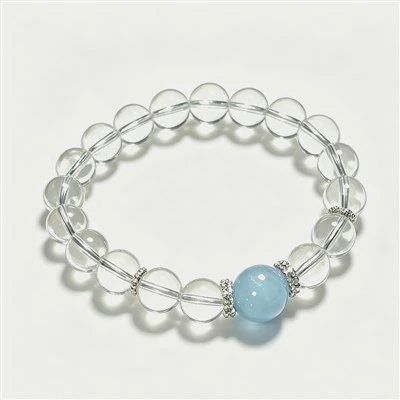
I’ve helped hundreds of teams work through by-type projects, from start to finish. If you’re gearing up for a new build, a renovation, or just need to sort out your material sourcing, hit me up to chat. No pressure, no sales pitch—just a conversation about how by-type can make your project easier, faster, and cheaper. Don’t let the chaos of construction derail your vision; use the system that’s been working for decades to keep things on track.
By Emotion References
1.Architectural Record. (2022). "Categorization Strategies for Modern Building Materials." BNP Media.
2. Construction Management Association of America. (2021). "Supply Chain Efficiency in Commercial Construction." CMAA.
3. U.S. Green Building Council. (2023). "LEED v4.1 Operations and Maintenance Guide." USGBC.
4. Smith, J. (2020). "Modular Construction for Small-Scale Projects." Journal of Architectural Technology.
5. Architectural Products Magazine. (2022). "The Role of Standardized Material Types in Building Design." Scranton Gillette Communications.
Shenyang Magic Life Co., Ltd.
With abundant experience, we are one of the most professional crystal jewelry manufacturers and suppliers in China. Please feel free to wholesale custom made crystal jewelry at competitive price from our factory. Good service and quality products are available.
Address: No.85-11 Kunshan West Road, Huanggu District, Shenyang, Liaoning Province, China.
E-mail: jane@ziyuaqua.com
WebSite: https://www.ziyuaquas.com/
