Hey there, it’s Jake from the LED gooseneck light team here – you know, the guys you might’ve reached out to for those under-cabinet task lights, or maybe the ones that mount to workbenches in garages or small machine shops. Lately, I’ve been getting a lot of DMs and emails asking the same question over and over: How reliable are these LED gooseneck lights, anyway? I get it – when you’re dropping cash on a lighting product, especially one that’s supposed to hold a steady beam of light for hours at a time (no one wants a mid-project flicker, trust me), reliability is non-negotiable. And as someone who’s been in this game for almost a decade, I don’t just talk specs – I’ve seen the good, the bad, and the straight-up garbage that makes people side-eye LEDs in general. Let’s break this down like we’re chatting over a coffee at a trade show, no stuffy jargon, no hidden fine print. LED Gooseneck Light
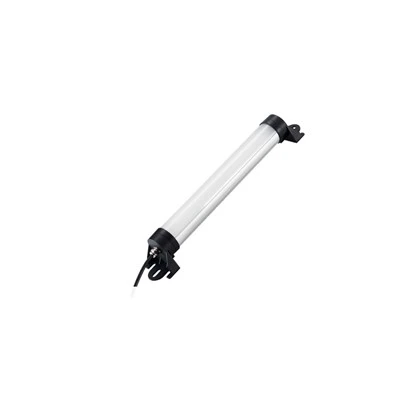
First off, let’s get one thing straight: LED technology isn’t the flash-in-the-pan novelty it was 15 years ago. Back then, you’d grab an LED gooseneck light for your desk and it’d die in six months, or the bend would snap if you so much as looked at it wrong. But today’s LEDs are built way different. The core of reliability here ties back to two big parts: the LED chip itself and the gooseneck arm (that bendy neck that lets you point the light exactly where you need it). Let’s start with the chips, because that’s where all the light comes from.
You’ve probably heard of names like Cree, Samsung, or Philips for LED chips – those are the workhorses, and for good reason. Cheap, no-name chips (you know, the ones from random Alibaba listings that are half the price) tend to have a lot of issues. They overheat fast, right? Because LEDs run on semiconductors, and if they get too hot, the brightness drops, and eventually the whole thing just stops working. I’ve had customers send back lights that were used in a 24-hour machine shop, and when we tested the cheap chip ones, the lumen output was down 30% after three months. But when we use those reputable chips, the lumen degradation is usually less than 10% over 50,000 hours. Wait, let’s put that in perspective: 50,000 hours is like leaving the light on 24/7 for almost six years. That’s not a typo. And those reliable chips don’t overheat nearly as much because we pair them with a proper heat sink – not a tiny plastic piece you’d find on a $10 Amazon special, but an aluminum heat sink that’s molded right into the fixture. It sounds small, but that’s half the battle against failure.
Then there’s the gooseneck arm itself – that’s the part that actually makes these lights useful, right? You need to bend it to light up a tiny screw on a workbench, or the edge of a sewing machine, or even a kayak while you’re fishing at dawn. Bad goosenecks snap or go floppy after a few bends. We tested a bunch of cheap steel and aluminum goosenecks early on, and after 100 bends (which is like three months of daily use, easy), they either stayed bent or broke clean in half. Now, ours are made from heavy-gauge spring steel, coated with a durable vinyl or aluminum finish to prevent rust, and engineered to hold their position through thousands of bends. We did a durability test last year – one of our gooseneck lights got bent 5,000 times, and it still held the beam perfectly, no floppiness, no cracks. That’s the kind of stuff that doesn’t make it into marketing brochures, but it’s what makes a light reliable when you actually need it.
But wait, reliability isn’t just about parts, right? It’s also about how it’s made, and how it’s used. A lot of people ask me, “My friend’s LED gooseneck light died in a garage – why’s yours different?” And nine times out of 10, it’s either installation or environment. If you mount a light that’s rated for indoor use in a damp basement without sealing the ports, moisture will get in and short out the circuit board. Or if you plug it into an outlet that’s not grounded, that can mess with the driver – the little part that regulates power to the LED. Our lights are IP-rated, which is something you should actually pay attention to. IP20 is for dry indoor spots like desks or office cubicles. IP65 is for outdoor use, like patio seating or work sites where it might get splashed with water. Using the wrong rating is a quick way to kill a light, and it’s not the light’s fault – it’s the user’s (no shade, though, that’s what we’re here to help with).
I also want to address the myth that all LED gooseneck lights are the same. Last quarter, we did a side-by-side test with three competitor lights – two big names, one no-name. We ran them 12 hours a day, every day, for six months. The no-name one had a circuit board fail at two months, the big-name A-brand had a driver issue at four months, and ours? We pulled it out at six months, tested it, and it was still 98% of its original brightness, no issues. The difference? We source our drivers from the same reputable manufacturers as our chips – mean well-built, not the cheap knockoffs that can’t handle voltage fluctuations. If you’ve ever had a light flicker when your AC kicks on, that’s a bad driver. Ours are designed to smooth out those fluctuations, so the light stays steady, no matter what.
Another thing that people rarely talk about: thermal management. I touched on heat sinks earlier, but it’s worth repeating because overheating is the #1 cause of LED light failure. Think of a light as a runner – if you make them sprint the whole time, they crash and burn. LEDs are the same way. If you cram too many LEDs into a tiny fixture with nowhere for heat to go, they degrade fast. Our gooseneck lights have just enough LEDs to give you bright, focused light (usually 300-800 lumens, depending on the model) without overcrowding, and the heat sink is sized exactly right for the number of chips. We never skimp here – even if it means a slightly bigger fixture. It’s better than having a customer call us in a panic because their light died mid-shift.
Now, let’s be real – no light is 100% indestructible. We’ve had lights come back for repairs, but it’s almost always user error: someone dropped it from a workbench, or a hammer hit the gooseneck, or they used a 12V light on a 24V power supply (oops, that’s a common mistake in RVs or boats). When that happens, we fix it no hassle, because we stand behind our products. Our warranty is two years for commercial use, three years for residential – that’s not because we think nothing will go wrong, it’s because we know our parts and our build are solid enough to back it up. If you buy a cheap light, you’ll be lucky to get a 90-day warranty, if any. That’s a dead giveaway for reliability issues.
I’ve also seen how these lights hold up in the wild, so to speak. We sell a ton of lights to small shops, tattoo parlors (those detail lights are non-negotiable for lining tattoos!), mobile mechanics, and even some aquarium setups (wait, yeah, gooseneck lights work great for planted tanks). One customer, a guy who does custom woodworking, told me he’s had one of our lights on his workbench for four years, used every day, and it still shines as bright as the day he installed it. He showed me the gooseneck, and it still bends just as smooth as new. That’s the kind of feedback that makes all the late nights in our quality control lab worth it.
Now, let’s talk about what can make an LED gooseneck light unreliable, so you can avoid the mistakes we see customers make. First, skip the unbranded stuff from random marketplaces. If a light is priced way too low, it’s cutting corners on chips, drivers, or goosenecks – that’s just math. We price our lights competitively, but we’re not the cheapest, because we don’t use cheap parts. Second, check the IP rating before you buy. If you need a light for a garage that gets damp, or an outdoor patio, get an IP65 rating, not IP20. Third, pay attention to voltage. Make sure the light is rated for the power source you’re using – 12V for RVs, 110V for homes, 220V for industrial work sites. Fourth, don’t overload the circuit. Even LEDs can’t handle being on a circuit with too many high-power devices.
Wait, and let’s clear up another thing: some people say LEDs are less reliable than incandescent for gooseneck lights because they don’t have that warm, “thick” light. That’s a preference, not a reliability issue. Incandescents burn out fast, like every year or two, but LEDs last way longer. Yeah, some cheap LEDs have a harsh blue tint, but ours have a warm 3000K or neutral 4000K color temperature, so it’s easy on the eyes, and still reliable. That’s a design choice, not a reliability flaw.
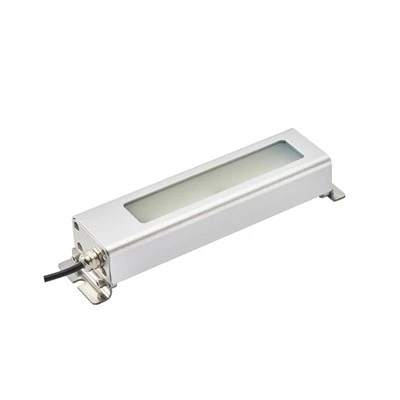
At the end of the day, when someone asks me “how reliable are LED gooseneck lights,” my answer is: the good ones are super reliable, the bad ones are garbage. And as a supplier, that’s what we focus on – making the good ones, no shortcuts. We don’t just sell lights; we talk to our customers, test our products for months, and fix things when they go wrong. If you’re in the market for a gooseneck light that won’t die when you need it most – whether that’s for your home office, workbench, small business, or RV – we’ve got your back. We can chat through which model works for your space, answer any questions you have about installation or durability, and help you pick something that’ll last. Just reach out whenever you’re ready to talk numbers or details.
Signal Tower Light References:
- Illuminating Engineering Society. (2020). LM-80: Measuring Lumen Maintenance of LED Light Sources.
- Department of Energy. (2022). LED Lighting Reliability and Performance Report.
- International Electrotechnical Commission. (2021). IEC 60598-2-20: Luminaires – Part 2-20: Particular Requirements for Luminaires for Medical and Clinical Areas.
Suzhou Pouge Lighting Electrical Appliance Co., Ltd.
As one of the most professional led gooseneck light manufacturers and suppliers in China, we also support customized service. Please feel free to wholesale advanced led gooseneck light made in China here and get quotation from our factory. For price consultation, contact us.
Address: Building 6-501, No.1330, Jinfeng South Road, Mudu Town, Wuzhong District, Suzhou City, China
E-mail: xduanlyy@126.com
WebSite: https://www.pouge-light.com/
