Hey there! I’m a supplier of filter units, and today I wanna chat about something super important: the filtration precision of a filter unit. So, what exactly is it, and why does it matter? Filter Unit
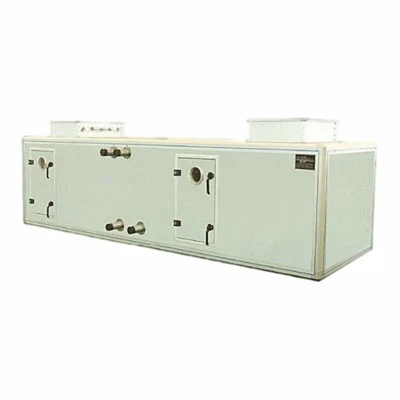
Let’s start with the basics. Filtration precision is all about how well a filter unit can remove contaminants from a fluid, whether it’s air, water, or some other kind of liquid. It’s usually measured in microns, which is a tiny unit of length. One micron is equal to one-millionth of a meter. Yeah, it’s really small!
Think of it like a net. If you have a net with big holes, it’ll only catch the big stuff. But if you have a net with really tiny holes, it can catch the small stuff too. That’s kinda how a filter unit works. The smaller the micron rating, the more precise the filter is, and the smaller the particles it can remove.
For example, if a filter has a filtration precision of 10 microns, it can remove particles that are 10 microns or larger. But if it has a precision of 1 micron, it can remove even smaller particles. This is really important in a lot of industries, like manufacturing, healthcare, and food and beverage.
In the manufacturing industry, for instance, precision is key. When you’re making things like electronics or automotive parts, you need to make sure that the fluids used in the process are free of contaminants. Even a tiny particle can cause a defect in the final product. That’s why high-precision filter units are so important. They can help prevent costly mistakes and ensure the quality of the products.
In the healthcare industry, filtration precision is also crucial. Hospitals use filter units to purify the air and water in patient rooms, operating theaters, and other areas. They need to make sure that the air is free of bacteria, viruses, and other harmful particles. A high-precision filter can help protect patients from infections and other health risks.
And in the food and beverage industry, filtration is used to remove impurities from water, juice, and other liquids. This helps improve the taste, quality, and safety of the products. For example, a brewery might use a filter unit to remove yeast and other particles from the beer before it’s bottled.
Now, let’s talk about how filtration precision is determined. There are a few different methods, but one of the most common is the beta ratio. The beta ratio is a measure of how well a filter can remove particles of a certain size. It’s calculated by dividing the number of particles upstream of the filter by the number of particles downstream of the filter.
For example, if a filter has a beta ratio of 100 for particles that are 5 microns in size, it means that for every 100 particles that enter the filter, only 1 particle passes through. This is a pretty good filter!
Another important factor to consider is the efficiency of the filter. Efficiency is a measure of how well the filter can remove particles of all sizes. It’s usually expressed as a percentage. For example, if a filter has an efficiency of 99% for particles that are 1 micron in size, it means that 99% of the particles that are 1 micron or larger are removed by the filter.
So, how do you choose the right filtration precision for your needs? Well, it depends on a few things. First, you need to consider the type of fluid you’re filtering. Different fluids have different levels of contaminants, so you’ll need a filter with a precision that’s appropriate for the fluid.
Second, you need to consider the application. If you’re using the filter in a critical application, like a hospital or a manufacturing plant, you’ll need a filter with a high precision. But if you’re using the filter in a less critical application, like a home water filter, you might be able to get away with a lower precision filter.
Finally, you need to consider the cost. High-precision filters are usually more expensive than low-precision filters. So, you’ll need to balance the cost with the benefits.
As a filter unit supplier, I’ve seen a lot of different applications and requirements. And I can tell you that choosing the right filtration precision is really important. It can make a big difference in the performance and efficiency of your system.
If you’re in the market for a filter unit, I’d be happy to help you find the right one for your needs. Just give me a call or send me an email, and we can talk about your specific requirements. I can provide you with detailed information about the filtration precision, efficiency, and other features of our filter units.

In conclusion, filtration precision is a crucial aspect of any filter unit. It determines how well the filter can remove contaminants from a fluid, and it’s important in a wide range of industries. By choosing the right filtration precision, you can ensure the quality, safety, and efficiency of your system. So, if you’re looking for a filter unit, don’t hesitate to reach out. I’m here to help you make the right choice.
Refrigeration Unit References:
- Fundamentals of Filtration, various industry textbooks
- Industry standards and guidelines for filtration in manufacturing, healthcare, and food and beverage sectors
Yancheng Lima Air Conditioning Engineering Co., Ltd.
As one of the leading filter unit manufacturers and suppliers in China, we warmly welcome you to buy discount filter unit for sale here and get quotation from our factory. Quality products and low price are available.
Address: No. 99, Xinyuan Road, Yannan High-tech Zone, Yancheng City
E-mail: yclima@yclima.com
WebSite: https://www.limakt.com/
