If you’ve ever walked through a high-rise office building, a classroom, or a shopping mall, you’ve probably never thought about the small, seemingly boring machine that works behind the scenes to keep those spaces safe: the building materials flammability tester. For years, I’ve supplied these machines to construction companies, testing labs, and regulatory bodies across the globe, and one of the most common questions I get from new customers—whether they’re just starting out in the industry or looking to upgrade their old equipment—is, “What is the measurement range of this thing, anyway?” Building Materials Flammability Tester
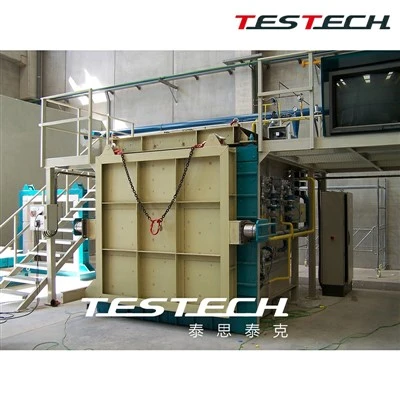
Let me be clear: I get it. Flammability testing for building materials isn’t like measuring a wall’s thickness or a tile’s weight, where the numbers are straightforward. It’s a mix of science, safety standards, and real-world use cases that depends on exactly what you’re testing, where you’re testing it, and what you’re trying to prove. Over the past 12 years in this business, I’ve learned that the measurement range isn’t just a number on a spec sheet—it’s the thing that can mean the difference between a material that’s code-compliant for office walls and one that’s only good for a backyard shed. Let’s break this down, plain and simple, like I would to a new customer calling my shop for the first time.
First, let’s get one thing straight: there’s no single, universal measurement range for every building materials flammability tester. The range changes based on the standard the tester is built to follow, the type of material it’s testing, and the performance criteria you need to hit. Most of my customers don’t just buy a tester and plug it in—they match it to a specific regulatory requirement, and that’s where the range comes into play. For example, in the U.S., the main standards are from ASTM International and the National Fire Protection Association (NFPA), while in Europe it’s EN standards, and in Asia it’s IS and JIS standards. Each of these sets a different range for testing heat release, flame spread, and burn time, so the tester has to be calibrated to fit that.
Let’s start with the core measurement that all these testers track: heat release rate (HRR). This is the amount of heat a material gives off when it catches fire, and it’s one of the most critical numbers for building safety. If a material releases too much heat too quickly, it can overwhelm a space before firefighters even arrive. For most standard small-scale tests (like ASTM E1354, which is used for everything from wall panels to carpet), the measurement range for HRR is typically 0 to 500 kilowatts per square meter (kW/m²). Wait, you might think that’s small, but these are small-scale tests—they use a 100mm by 100mm sample, so 500 kW/m² translates to a total heat release of 5 kW for that small sample. But here’s the thing: if you’re testing larger materials for full-scale applications, like entire ceiling panels, that range goes way up. Some of my larger, high-powered testers can go from 0 to 1000 kW/m², and even up to 2000 kW/m² for testing heavy materials like wood products or insulation that’s used in industrial facilities.
Next up is flame spread rate. That’s how fast flames move across the surface of a material, and it’s measured in either millimeters per minute (mm/min) or as a flame spread index (FSI), which is compared to a reference material (like red oak, which has an FSI of 100). For small-scale flame spread tests, like the ones used for interior wall coverings, the measurement range is usually 0 to 100 mm/min for horizontal flame spread and 0 to 500 mm/min for vertical flame spread. But if you’re testing exterior building materials, like siding or roof shingles, the range changes. For example, ASTM E108, the standard for roof coverings, uses a larger test setup where flame spread can range from 0 to 2000 mm/min, and the index goes up to 200. That’s because exterior materials have to resist wildfire exposure, which is a way different scenario than a small fire in an office.
Burn time is another key measurement, and its range is often one that surprises new customers. When you test a material, you need to know how long it burns after an ignition source is removed, not just how fast it flames. For most interior materials, the burn time range is 0 to 10 minutes total, with critical thresholds at 2 minutes and 5 minutes. But for materials that are designed to be flame-retardant, like fireproof drywall, the range is much lower—we’re talking 0 to 30 seconds of sustained burn before self-extinguishing. On the flip side, some unprocessed materials, like solid pine, can have a burn time that goes over 15 minutes, which is why they’re not allowed in commercial building walls.
Wait, but here’s a big part of the measurement range that most spec sheets don’t tell you: the tester’s limit for smoke and toxic gas measurement. Smoke is actually the leading cause of fire-related deaths, not burns, so we can’t ignore that. The measurement range for smoke density (usually measured as optical density, or Dm) is another key part of the tester’s capabilities. For ASTM E662, the standard for smoke density, the range is 0 to 100 for non-flaming (smoldering) tests and 0 to 500 for flaming tests. That’s a big jump, because flaming fires produce way more smoke than smoldering ones. For example, a material like polyurethane foam might have a Dm of 400 when flaming, which means it’s way too smoky for interior use, while a mineral wool insulation might have a Dm of 10, which is safe.
Now, let’s talk about why this range matters, and why buying a tester without checking the range for your specific use case is a recipe for disaster. I remember a few years ago, a small construction company called me up panicking. They’d bought a cheap used tester from an online marketplace, and they were trying to test wall panels for a new school in Texas. The Texas Building Code follows NFPA 286, which is a full-scale room corner test that requires measuring HRR up to 1500 kW/m² over a 10-minute test. The cheap tester they’d bought only had a range of 0 to 500 kW/m²—so it couldn’t even measure the peak heat release of the panels they were testing. They had to rent a proper tester from me for three weeks, and they ended up paying more in rental fees than they would have if they’d just bought the right tester in the first place. That’s the kind of mistake I see all the time, because people focus on price instead of matching the measurement range to their needs.
Another example: a fire testing lab in Germany reached out last year looking to upgrade their old EN 13823 tester, which is used for building exterior wall insulation. The old tester they had had a heat release range of 0 to 800 kW/m², but the latest European standard updates require testing up to 1200 kW/m². Their old equipment was out of date, so they were getting inconsistent results and failing audits. The new tester we supplied had a range of 0 to 1500 kW/m², plus upgraded sensors that can track flame spread and smoke density at those higher heat levels. They came back a few months later and said that since switching, their audit pass rate went up 20%—because they could get accurate data, not numbers that were cut off by a too-narrow measurement range.
But here’s the good news: a good building materials flammability tester doesn’t just have a fixed range. The best ones I supply are flexible, with adjustable ranges that can be calibrated for different standards and sample sizes. For example, if you’re testing small carpet samples for ASTM E648 (the standard for floor coverings), you can set the HRR range to 0 to 200 kW/m² for precise, low-level measurements. If you’re testing large ceiling panels for NFPA 286, you can switch the range to 0 to 2000 kW/m² to capture the full peak heat release. That flexibility is key for labs and contractors that test multiple types of materials for different projects.
I also want to clarify a common misconception: a wider measurement range isn’t always better. If you’re testing small, low-heat materials like fabric curtains, a tester with a range of 0 to 2000 kW/m² will be less precise than one with a range of 0 to 500 kW/m². The wider range means the small differences in heat release for low-level materials will be harder to detect, leading to inaccurate results. It’s like using a ruler that measures in feet to measure the length of a pencil—you’ll get a rough idea, but not the exact number you need. The sweet spot is matching the range to the specific standard and material you’re testing.
Now, let’s talk about what goes into setting that range. The sensors in a flammability tester are calibrated to measure temperature, heat, and gas levels within a certain window. For heat release, the most common sensors are cone calorimeters, which use a gas burner to heat the sample at a controlled rate and measure the oxygen consumed (since burning uses oxygen, so less oxygen in the exhaust means more heat released). The oxygen sensors in these testers have to be calibrated to read accurately from 0% oxygen (no heat) down to around 15% oxygen (maximum burning) for most standard ranges. For smoke density, the light sensors have to be able to detect how much smoke blocks light, so their range is set based on the standard’s required thresholds—like the 0 to 500 Dm for flaming tests I mentioned earlier.
Over the years, I’ve also seen measurement ranges expand as fire science advances. Ten years ago, most small-scale testers only went up to 500 kW/m², but as we learn more about how modern synthetic materials burn, regulators started requiring higher ranges to capture the full risk of new products. For example, with the rise of cross-laminated timber (CLT) in building construction, which is used for large multi-story buildings, testers now need to measure heat release up to 1800 kW/m² to assess how CLT panels perform in large fires. That’s a relatively new requirement, and it means a lot of old testers are becoming obsolete, which is why so many of my customers are upgrading their equipment right now.
But here’s the thing I want every reader to take away from this: the measurement range of a building materials flammability tester isn’t a random number pulled from a spec sheet. It’s the backbone of safe building construction. If a tester’s range is too narrow, you’ll miss critical fire risk data, leading to materials that don’t meet code and put people in danger. If it’s too narrow for the standard you’re following, you might waste time and money on retests, like that construction company in Texas I told you about. If it’s not calibrated correctly for the material you’re testing, your results will be useless, and you could end up using materials that are more dangerous than you thought.
That’s why, when I talk to a potential customer, I never just throw numbers at them. I ask them: what kind of materials are you testing? What standards do you have to comply with? What size samples do you use? What’s the end use of the building? All of these questions help me figure out exactly what measurement range they need, so they don’t buy something that’s too small, too big, or not flexible enough. I’ve been in this business long enough to know that a tester is only as good as its ability to give you accurate, reliable data, and that starts with the right measurement range.
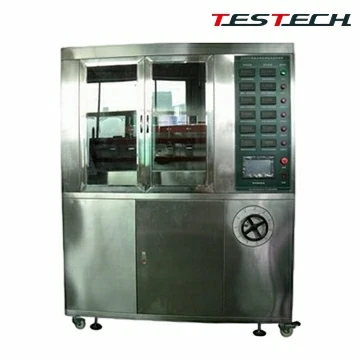
If you’re in the market for a building materials flammability tester, or you’re looking to upgrade your current equipment and want to make sure you’ve got the right range for your needs, I’m here to help. I’ve worked with labs, contractors, and regulators in every industry, and I can walk you through the different ranges, standards, and options that fit your specific work. Don’t let a narrow or mismatched measurement range put your projects, your team, or the public at risk. Reach out to talk through your requirements, and let’s find the right tester for you.
Universal Fire Tester References
ASTM International. Standard Test Method for Heat and Visible Smoke Release Rates for Materials and Products Using an Oxygen Consumption Calorimeter, ASTM E1354. ASTM International, 2022.
National Fire Protection Association. Standard Method for Room Fire Test of Wall and Ceiling Materials and Assemblies, NFPA 286. NFPA, 2021.
European Committee for Standardization. Reaction to Fire Tests for Building Products – Burning Behavior of Building Products Exposed to Thermal Radiation from a Single Source, EN 13823. CEN, 2020.
International Organization for Standardization. Reaction to Fire Tests – Smoke Generation – Part 1: Method for Determination of Specific Optical Density of Smoke from a Single Fuel Source, ISO 5659-1. ISO, 2017.
TESTech Instrument (Suzhou) Technologies
TESTech Instrument (Suzhou) Technologies is one of the most reliable building materials flammability tester manufacturers and suppliers in China. If you’re going to wholesale durable building materials flammability tester, welcome to get quotation from our factory. For price consultation, contact us.
Address: 8/F, R&D and Production Workshop No. 5, Jiangsu Guoqian Technology Innovation Industrial Park, 168 Lüliangshan Road, Huqiu District, Suzhou, Jiangsu Province, China
E-mail: sales@testech.com.cn
WebSite: https://www.testechfiretest.com/
