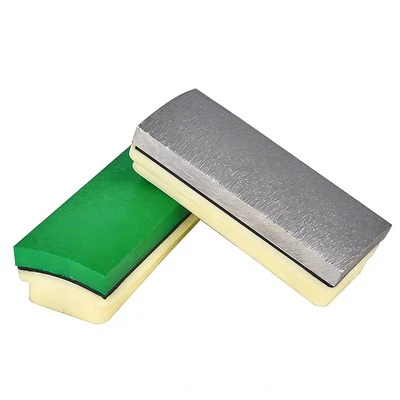
As a trusted supplier of Metal Fickert Abrasive, I often receive inquiries from customers about the recommended feed rate for using our product. The feed rate is a crucial parameter in abrasive applications, as it significantly impacts the efficiency, quality, and cost – effectiveness of the machining or surface – treatment process. In this blog, I will delve into the factors that influence the recommended feed rate and provide some general guidelines for using Metal Fickert Abrasive. Metal Fickert Abrasive
Understanding the Feed Rate
The feed rate refers to the speed at which the workpiece moves relative to the abrasive. In the context of Metal Fickert Abrasive, it can be the speed at which the metal piece is fed through a grinding machine, a sanding belt, or other abrasive – based equipment. The right feed rate ensures that the abrasive can effectively remove material from the workpiece without causing excessive wear on the abrasive itself or compromising the quality of the finished surface.
Factors Influencing the Recommended Feed Rate
Workpiece Material
The type of metal being worked on is one of the most significant factors in determining the feed rate. Different metals have different hardness, ductility, and machinability. For example, softer metals like aluminum can generally tolerate a higher feed rate compared to harder metals such as stainless steel or titanium. Aluminum is more malleable, and the abrasive can remove material more easily, allowing for a faster feed. On the other hand, stainless steel has a higher resistance to abrasion, and a slower feed rate is often required to ensure proper material removal and prevent overheating of the workpiece and the abrasive.
Abrasive Grit Size
The grit size of Metal Fickert Abrasive also plays a vital role in setting the feed rate. Coarser grits, such as 24 – 60 grit, are designed for rapid material removal. They can handle a relatively high feed rate because they have larger abrasive particles that can cut through the material more aggressively. Finer grits, like 120 – 220 grit, are used for finishing operations. These finer particles are more delicate, and a slower feed rate is necessary to achieve a smooth and precise surface finish. If a high feed rate is used with a fine – grit abrasive, it may result in an uneven surface or premature wear of the abrasive.
Abrasive Bond Type
The bond type of the abrasive holds the abrasive grains together. There are different bond types, such as vitrified, resinoid, and rubber bonds. Each bond type has its own characteristics and performance capabilities. Vitrified bonds are very hard and durable, and they can withstand higher feed rates during heavy – duty grinding operations. Resinoid bonds are more flexible and are often used in applications where a certain amount of give is required, such as in sanding or polishing. The feed rate for resinoid – bonded abrasives may need to be adjusted to prevent over – loading the bond and causing the abrasive grains to dislodge prematurely. Rubber – bonded abrasives are typically used for fine – finishing operations, and they require a relatively low feed rate to ensure a consistent and high – quality finish.
Machine Power and Capacity
The power and capacity of the machining equipment also affect the recommended feed rate. A more powerful machine can handle a higher feed rate because it has the ability to drive the abrasive and the workpiece at a faster speed without stalling. If a machine has limited power, using a feed rate that is too high can cause the machine to overheat, reduce its lifespan, and result in poor machining quality. It is essential to match the feed rate with the machine’s specifications to ensure optimal performance.
General Guidelines for Feed Rates
Rough Grinding
For rough grinding operations using Metal Fickert Abrasive, when working on softer metals like mild steel with a coarse – grit (around 36 – 60 grit) vitrified – bonded abrasive, the feed rate can range from 0.05 to 0.15 inches per revolution (IPR) on a cylindrical grinding machine. For surface grinding, the table feed rate can be between 10 to 20 feet per minute (FPM). However, if you are working on harder metals such as high – carbon steel, the feed rate should be reduced to around 0.02 to 0.08 IPR for cylindrical grinding and 5 to 15 FPM for surface grinding.
Finishing Operations
In finishing operations, when using a fine – grit (120 – 220 grit) resinoid – bonded abrasive, the feed rate should be significantly lower. For cylindrical grinding, the feed rate can be as low as 0.001 to 0.005 IPR. For surface grinding, the table feed rate may range from 2 to 8 FPM. These lower feed rates allow the fine abrasive particles to create a smooth and precise surface finish.
Sanding and Polishing
When using Metal Fickert Abrasive in sanding or polishing applications, such as with a sanding belt or a polishing wheel, the feed rate depends on the specific requirements of the finish. For initial sanding to remove minor imperfections, a medium feed rate can be used. However, for the final polishing stage, a very slow feed rate is necessary to achieve a mirror – like finish. A general guideline for sanding can be a feed rate of 5 to 15 feet per minute, while for polishing, it can be as low as 2 to 5 feet per minute.
The Importance of Testing
It is important to note that the recommended feed rates are general guidelines, and actual optimal feed rates may vary depending on the specific conditions of each application. Therefore, it is always advisable to conduct small – scale tests before full – scale production. By testing different feed rates on a sample workpiece, you can determine the feed rate that provides the best balance between material removal rate, surface finish quality, and abrasive wear. This testing process can save time and money in the long run by avoiding costly mistakes and ensuring efficient production.
Conclusion
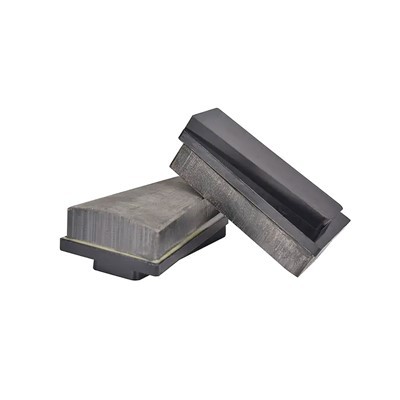
In conclusion, determining the recommended feed rate for using Metal Fickert Abrasive is a complex process that involves considering multiple factors such as workpiece material, abrasive grit size, bond type, and machine power. By understanding these factors and following the general guidelines provided, you can optimize the performance of our abrasive product in your applications. Whether you are involved in rough grinding, finishing operations, or sanding and polishing, finding the right feed rate is essential for achieving high – quality results and maximizing the lifespan of the abrasive.
Diamond Frankfurt Abrasive If you are interested in learning more about our Metal Fickert Abrasive or need further advice on the appropriate feed rate for your specific application, we encourage you to reach out to us for a detailed discussion. Our team of experts is ready to assist you in making the most of our products and ensuring the success of your projects.
References
- "Abrasive Machining Technology" by Malkin, S.
- "Handbook of Machining with Abrasives" by R. Komanduri and A. R. H. Machado.
- Technical literature on Metal Fickert Abrasive products.
Quanzhou Cheefung New Materials Co., Ltd.
As one of the most experienced metal fickert abrasive enterprises in China, we are able to meet the needs of the majority of our customers. Please feel free to wholesale advanced metal fickert abrasive made in China here from our factory. For price consultation, contact us.
Address: Jinshan Community, Licheng District, Quanzhou City, Fujian, China
E-mail: info@prostonetools.com
WebSite: https://www.prostonetools.com/
